View as cards
Disney cover
An open-source case, told as a story

Disney

The founder story of Walt Disney, in 10 beats — then how the business actually works.

Scroll↓
About this case

Welcome to the open-source case for Disney. This is a story that begins with a boy in Marceline, Missouri, a Big Chief drawing tablet from his aunt Maggie, and a nickel earned for a drawing of a neighbor's horse—the epiphany that art could make money, carried by the son of a frustrated entrepreneur who kept moving the family in search of success. What makes Disney worth the treatment is its rare claim to build something practically eternal: timeless animated characters with genuine personality that audiences emotionally connect with across generations, sustained by a business that by 1935 earned more from merchandise than from films. To understand it, we look through four lenses: the Founder Story traces how Walt Disney turned that childhood epiphany into a life's work; the Golden Circle names the why—bringing joy and wonder by making dreams tangible; the Lean Canvas shows how the company operates and makes money through merchandise licensing and royalties; and the Empathy Map brings us close to the middle-class American family seeking wholesome entertainment that bridges generations.

Act One

How Disney came to be

First the arc at a glance, then the story in 10 drawn beats.
The arc · 7 milestones
  1. 1
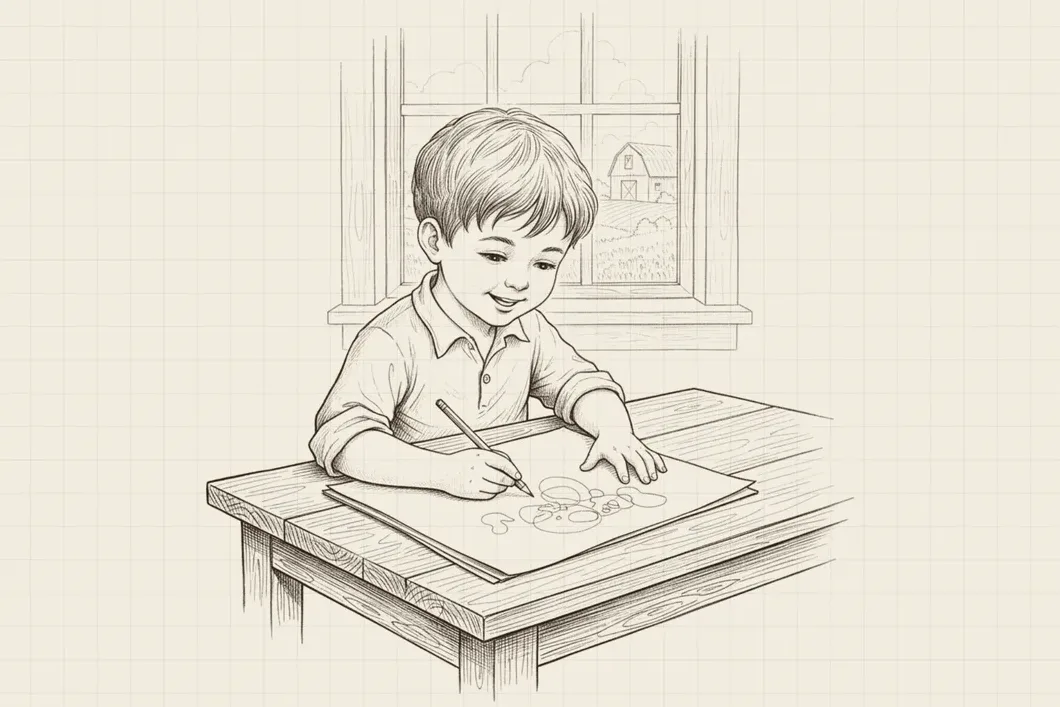
    A nickel for a drawing

    A Missouri boy earns his first nickel sketching a neighbor's horse and learns art can make money. s1

  2. 2
    Chasing the cartoon dream

    After WWI, Walt returns to Kansas City and partners with Ub Iwerks to build his first studio. s1

  3. 3
    Betrayed over Oswald

    In 1928 Charles Mintz seizes Oswald and Walt's animators, leaving him with nothing but a lesson. s1

  4. 4
    Mickey finds his voice

    Obsessed with control, Walt creates Mickey and pioneers synchronized sound in Steamboat Willie. s1

  5. 5
    Mickey mania

    Depression-era fans embrace plucky Mickey; by 1935 merchandise outearns the films themselves. s1

  6. 6
    Betting it all on Snow White

    'Disney's Folly' becomes an authentic masterpiece, proving animation could last forever. s1

  7. 7
    The eternal flywheel

    IP, films, merchandise and Disneyland fuse into an integrated machine outliving Walt himself. s1
Now the fuller story, drawn beat by beat↓
Illustration: Once upon a time...
01 / 10
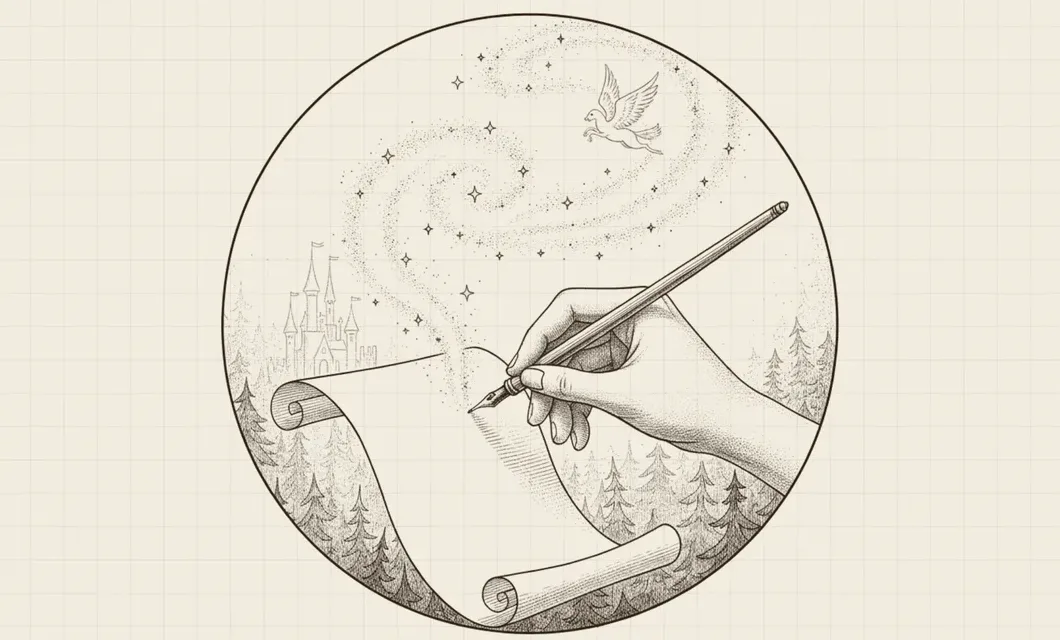
Once upon a time...

There was a boy in Marceline, Missouri who received a Big Chief drawing tablet and pencil set from his aunt Maggie. When a retired neighbor paid him a nickel for a drawing of his horse, young Walt Disney had an epiphany that would shape his entire life: art could make money. He was the son of a frustrated entrepreneur who had failed at farming, carpentry, and a jelly factory investment, constantly moving the family in search of success.

“My my hobby, my my art, it can make me money.”
s1
Illustration: Every day...
02 / 10
Every day...

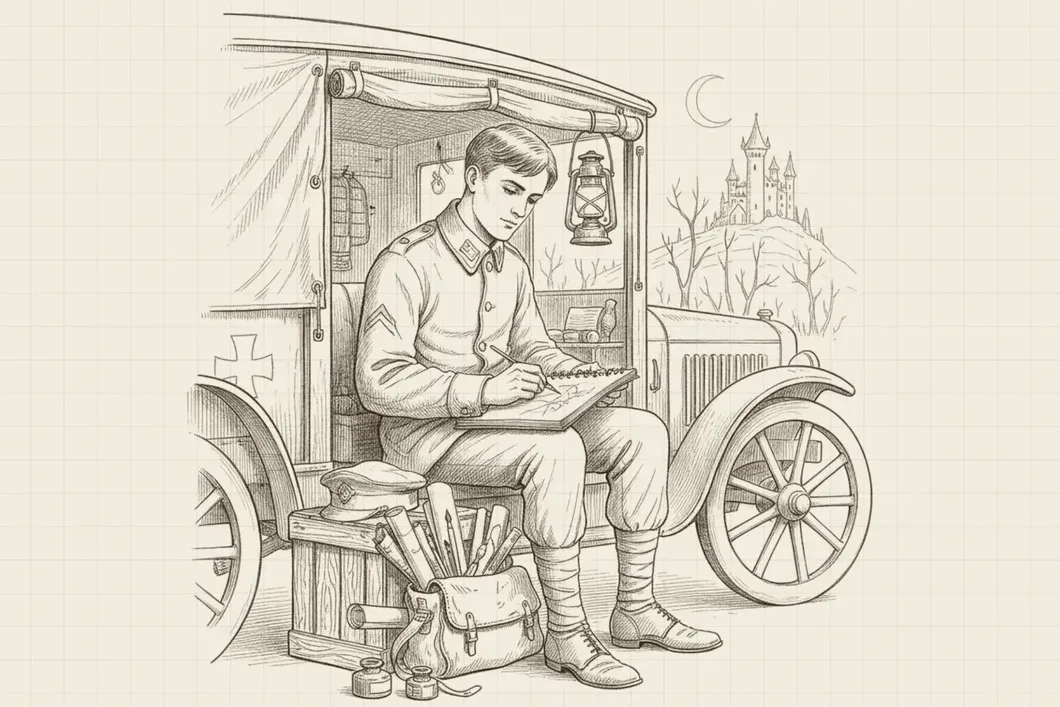
Walt worked to turn drawing into a profession. After serving as a Red Cross ambulance driver in WWI, he returned to Kansas City determined to become a cartoonist. He partnered with Ub Iwerks to form 'Iwerks Disney Commercial Artists Incorporated'—his first business where he wasn't even the main name on the door. They created cartoons and built a small studio, chasing the dream of making art that could sustain them.

s1
Illustration: One day...
03 / 10
One day...

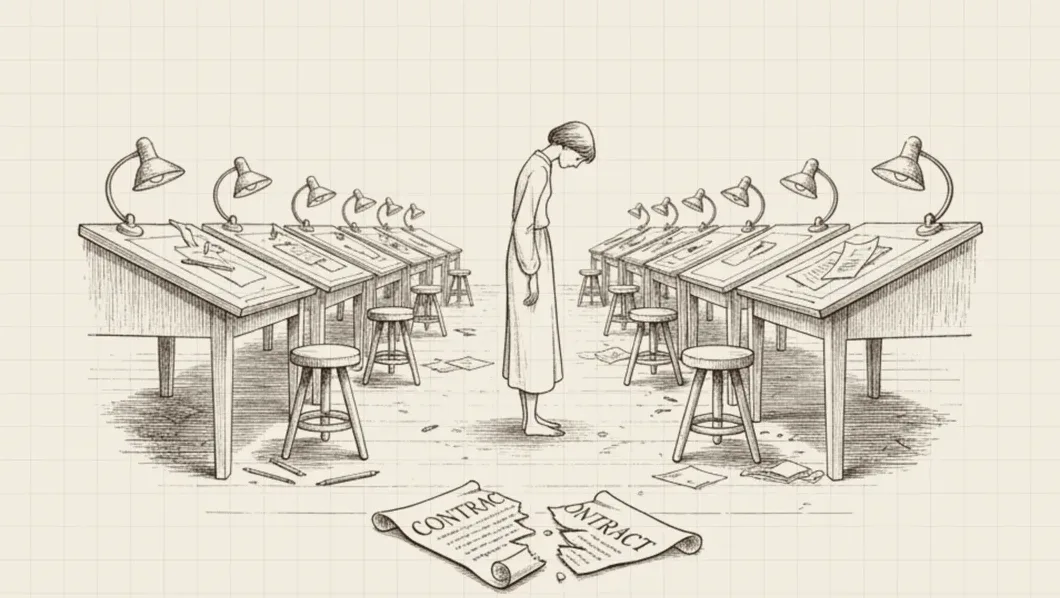
Everything collapsed. In early 1928, distributor Charles Mintz revealed he had secretly signed contracts with nearly all of Walt's animators and owned the rights to Oswald the Lucky Rabbit, Walt's most successful character. Walt was left with nothing—no customer contract, no employees, no intellectual property. The enterprise value was effectively zero. It was a betrayal he would never forget.

“He's got nothing. He's got no customer contract. He's got no employees. He's got no intellectual properties. Suddenly, the enterprise value... is effectively zero.”
s1
Illustration: Because of that...
04 / 10
Because of that...

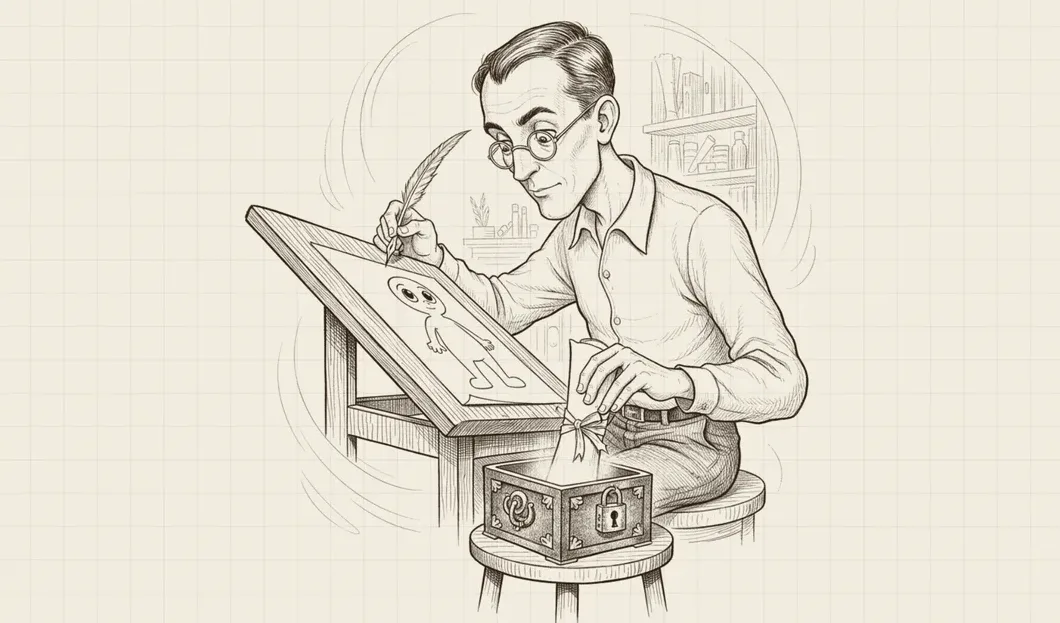
Walt became obsessed with control. He created Mickey Mouse—a character he would own completely. More importantly, he pioneered synchronized sound with Steamboat Willie in 1928, creating the first cartoon where action and audio were frame-by-frame synchronized. The audience reaction was unlike anything he'd ever seen—the sound gave the illusion of something emanating directly from the screen. Mickey wasn't just a drawing anymore; he had personality, emotion, life.

“I never saw such a reaction in an audience in my life. The scheme worked perfectly. The sound itself gave the illusion of something emanating directly from the screen.”
s1
Illustration: Because of that...
05 / 10
Because of that...

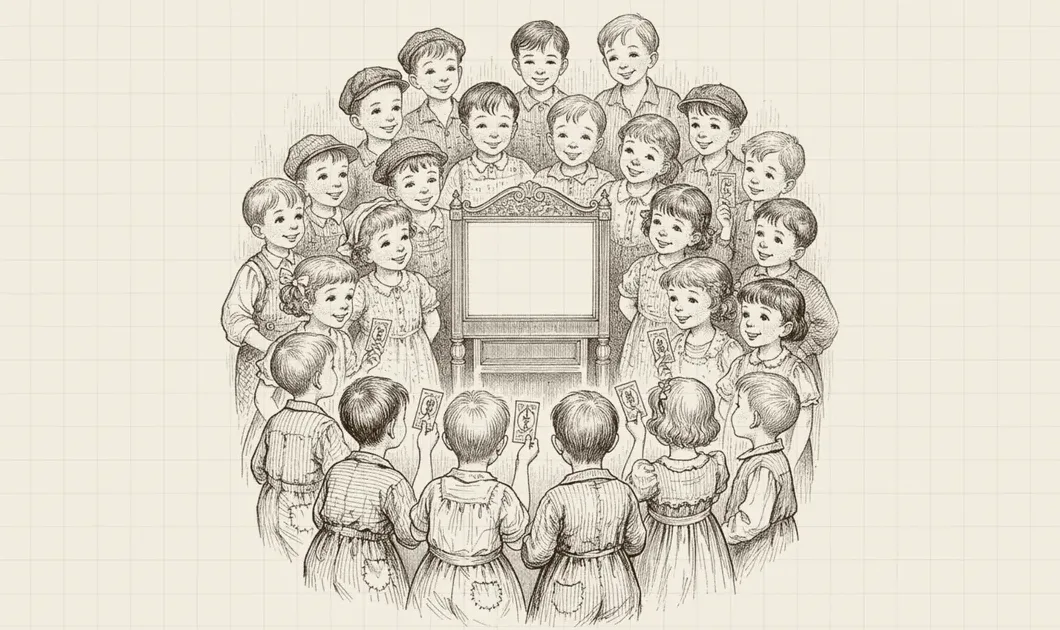
Mickey Mouse became a cultural phenomenon during the Great Depression. By 1929, 800 Mickey Mouse clubs sprang up across America with over 1 million members—more than the Boy and Girl Scouts combined. People saw plucky Mickey as an underdog who always won, a symbol they could identify with through hard times. Walt realized something profound: audiences didn't just want to watch his characters—they wanted to live with them. By 1935, Disney was earning more from merchandise than from films.

“there are 800 Mickey Mouse clubs across the country with more than 1 million total members. That is more members than the Boy and Girl Scouts of America combined at this point in time.”
s1
Illustration: Because of that...
06 / 10
Because of that...

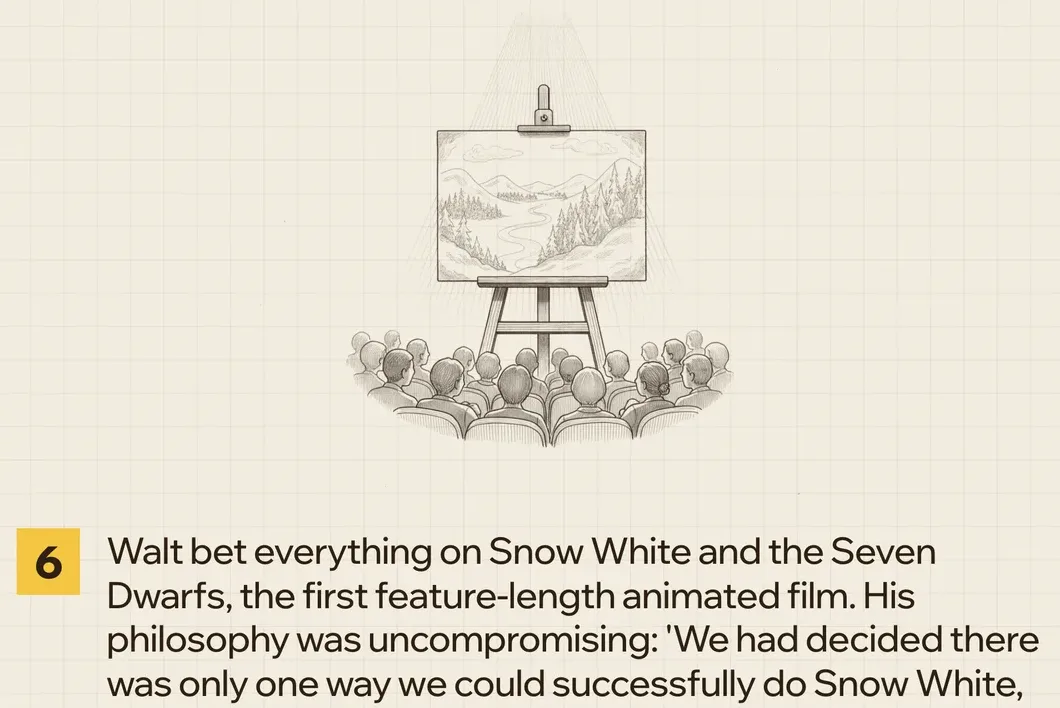
Walt bet everything on Snow White and the Seven Dwarfs, the first feature-length animated film. His philosophy was uncompromising: 'We had decided there was only one way we could successfully do Snow White, and that was to go for broke, shoot the works. There would be no compromise on money, talent, or time.' Hollywood called it 'Disney's Folly,' but when it premiered in 1937, Time magazine proclaimed it 'an authentic masterpiece to be shown in theaters and beloved by new generations long after the current crop of Hollywood stars, writers, and directors are sleeping where no prince's kiss can wake them.' Snow White proved animation could be eternal.

“We had decided there was only one way we could successfully do Snow White, and that was to go for broke, shoot the works. There would be no compromise on money, talent, or time.”
s1
Illustration: Until finally...
07 / 10
Until finally...

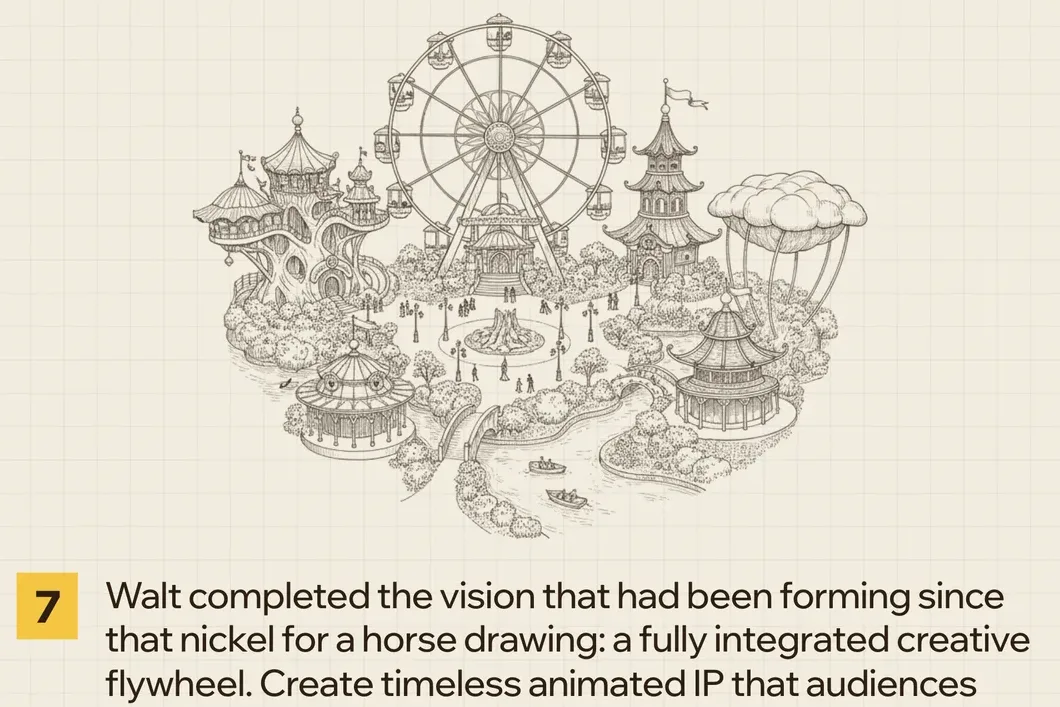
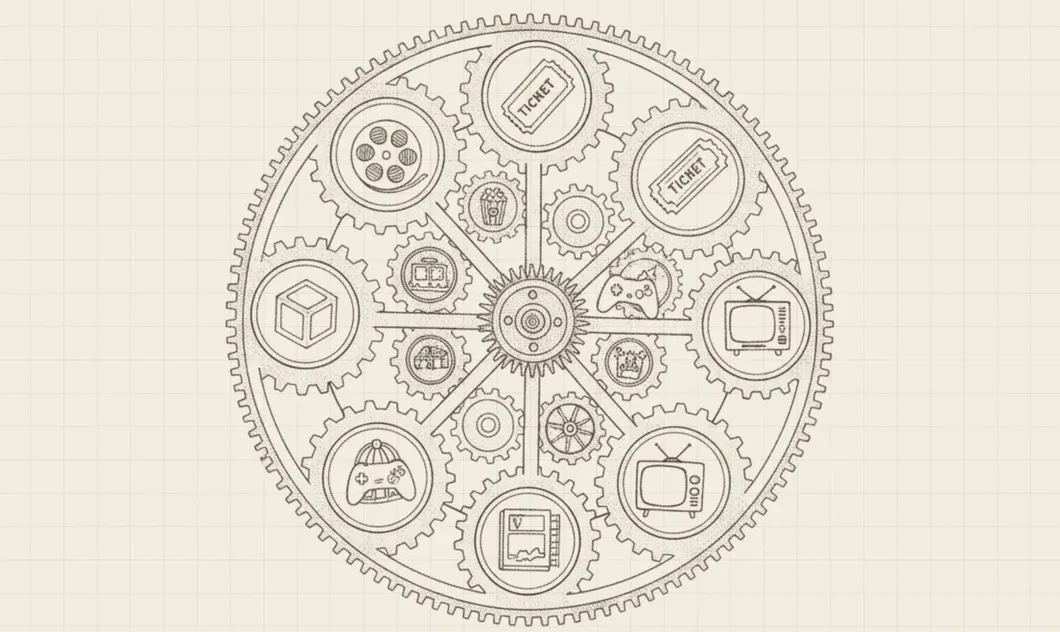
Walt completed the vision that had been forming since that nickel for a horse drawing: a fully integrated creative flywheel. Create timeless animated IP that audiences love. Maximize distribution through films. Feed that IP into merchandise, re-releases every seven years, television shows, and finally—Disneyland, a physical place where families could walk inside the stories. When Disneyland opened in 1955, 83 million people watched on TV, nearly half of America. Within two months, a million visitors had come. Walt had learned to go direct to the public, bypassing all middlemen, controlling every touchpoint.

“I said television is going to be my way of going direct to the public, bypassing the middleman.”
s1
Illustration: And every day after that...
08 / 10
And every day after that...

The Disney flywheel spun. Roy Disney articulated what his brother had built: 'Our product is practically eternal. Our diversified activities are related and tend to complement each other. Integration is the key word around here.' The Wall Street Journal put it on the front page in 1958, immortalizing the model. When Walt died in 1966, the company had barely begun—99.95% of Disney's current market value would be created after his death, proof that he had built something that transcended any single person.

“Our product is practically eternal.”
s1
Illustration: Reflection / realization
09 / 10
Reflection / realization

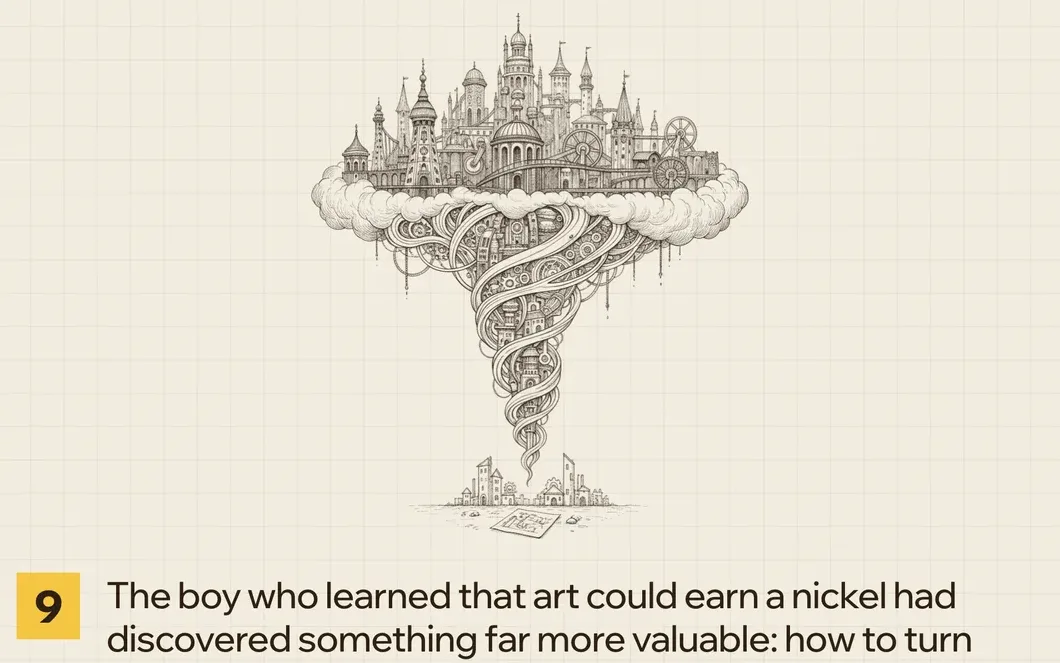
The boy who learned that art could earn a nickel had discovered something far more valuable: how to turn imagination into an eternal business. The trauma of losing Oswald taught him that ownership and control mattered more than short-term success. The Depression taught him that people needed characters to believe in. Snow White taught him that quality compounds forever. And Disneyland taught him that the ultimate product wasn't a film or a toy—it was a feeling, an experience, a place where dreams felt real. Walt didn't just create entertainment; he created a machine that turns stories into belonging.

s1
Illustration: The journey today
10 / 10
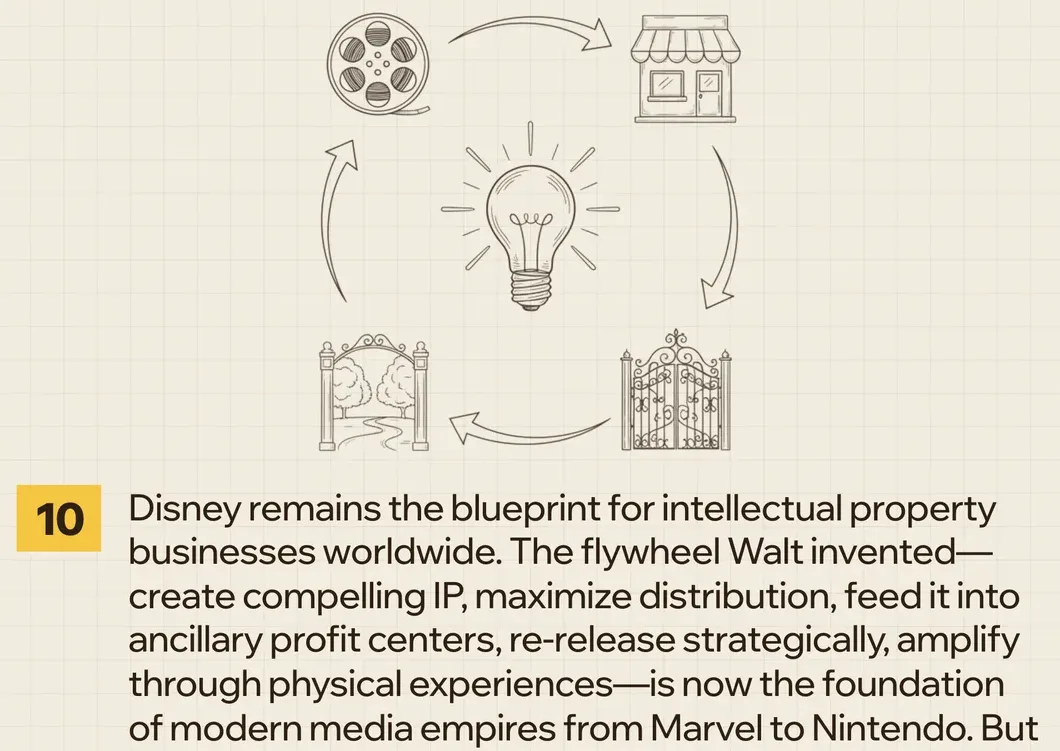
The journey today

Disney remains the blueprint for intellectual property businesses worldwide. The flywheel Walt invented—create compelling IP, maximize distribution, feed it into ancillary profit centers, re-release strategically, amplify through physical experiences—is now the foundation of modern media empires from Marvel to Nintendo. But the lesson goes deeper: Walt proved that the most valuable businesses aren't built on transactions, but on relationships with characters that don't age, don't demand profit participation, and can be loved by generation after generation. He turned the ephemeral art of storytelling into something eternal, and in doing so, created one of the most durable business models ever conceived.

s1
Act Two

Why it exists

Start at the belief at the center — then the circle zooms out through the method and the offer.

WHY

To bring joy and wonder to people by making dreams tangible—transforming imagination into experiences that connect generations and prove that art, hope, and optimism can triumph even in the darkest times.

s1
HOW

Create timeless, character-driven animated IP that audiences love deeply enough to want in every part of their lives. Maximize distribution through every channel—film, merchandise, television, and immersive physical spaces. Maintain obsessive creative control over all intellectual property. Re-release content strategically every 7 years to capture new generations. Go direct to the public, bypassing middlemen. Never compromise on quality: 'shoot the works' and invest whatever it takes to make something genuinely compelling, because audiences will not buy mediocrity.

s1
WHAT

Animated films with humanized characters whose humor comes from personality, not slapstick. Merchandise that lets customers carry beloved characters into their daily lives. Television programming that goes direct to audiences. Theme parks that are 'living blueprints' where people experience stories they can't find anywhere else and stay three times longer than competitors because the environments are so pleasant. All built on the principle that 'our product is practically eternal'—animated IP that can be re-released to new generations indefinitely.

s1
Act Three

Who it serves

Step into one customer’s world — the person the whole business is built around.
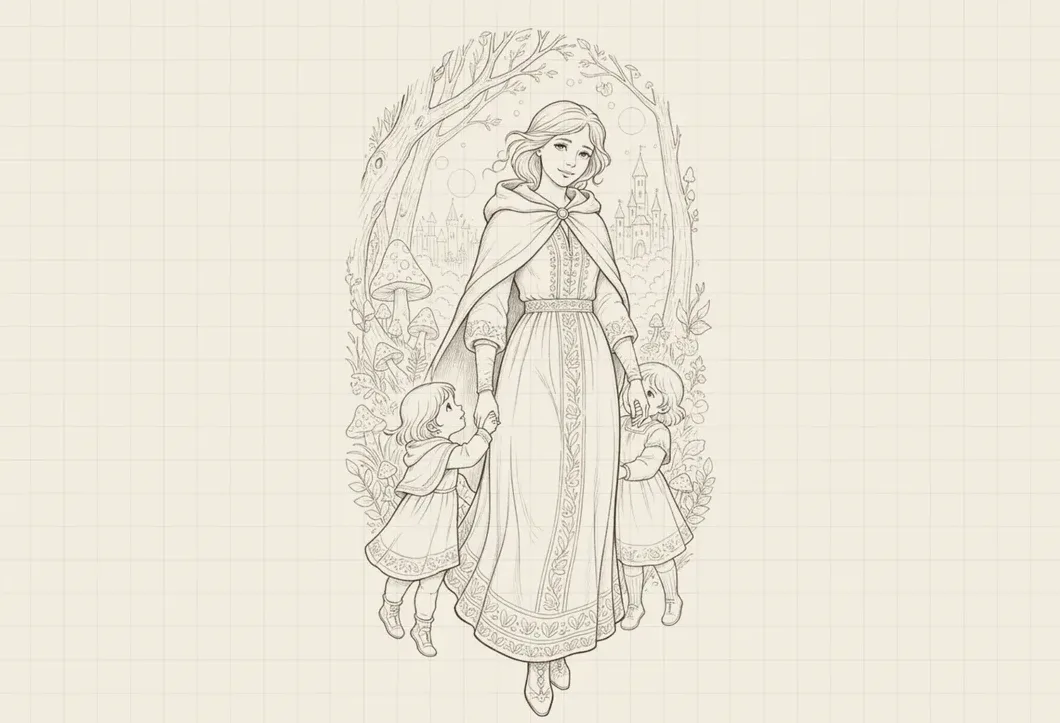
Illustration of Margaret Thompson
Meet
Margaret Thompson
32-year-old mother of two young children (ages 5 and 7)
Middle-class American family during the 1950s-1960s golden age of Disney, seeking wholesome entertainment and shared experiences that bridge generations while navigating post-war prosperity and changing media landscape
What they SEESees
She sees her children and millions of kids craving Mickey cartoons, Davy Crockett sweeping the nation, and half of America tuning into Disneyland's opening.
from the empathy map
  • Her children and millions of other kids desperately wanting to watch Mickey Mouse cartoons over and over, gathering at clubs every weekend s1
  • Massive cultural phenomena like Davy Crockett sweeping the nation with 10 million coonskin caps and children everywhere singing the ballad s1
  • Nearly half of America tuning in to watch Disneyland's opening broadcast—a shared national moment of wonder s1
  • Critical acclaim and special recognition like Snow White receiving a unique Oscar with seven small Oscars for the dwarfs s1
What they HEARHears
She hears critics call Snow White ''an authentic masterpiece'' and neighbors say Disneyland has surpassed even the Grand Canyon and Yellowstone.
from the empathy map
  • Critics and cultural authorities declaring Snow White 'an authentic masterpiece to be shown in theaters and beloved by new generations long after the current crop of Hollywood stars, writers, and directors are sleeping' s1
  • Neighbors and friends saying Disney merchandise might be America's path out of economic difficulties—that these products matter culturally and economically s1
  • That Disneyland has surpassed even the Grand Canyon and Yellowstone in visitors, becoming America's most popular destination s1
What they SAYSays
''Disney is wholesome entertainment we can trust''—the same Snow White she loved, still magical, at a park so pleasant they naturally stay all day.
from the empathy map
  • Disney provides wholesome family entertainment we can trust—the characters have genuine personality and humor comes from who they are, not chaotic action s1
  • We can introduce our children to the same Snow White we loved, and it's just as magical now as it was when we first saw it s1
  • Disneyland is worth the trip because you can spend the whole day there comfortably—it's such a pleasant place that we naturally stay longer and there's always more to discover s1
What they DODoes
She takes her kids to Mickey Mouse Club gatherings, buys watches and coonskin caps, plans Disneyland trips, and tunes into weekly Disney television.
from the empathy map
  • Takes her children to Mickey Mouse Club gatherings every weekend where they join 1 million other members watching cartoons repeatedly s1
  • Purchases Disney merchandise like Mickey Mouse watches and Davy Crockett coonskin caps so her children can maintain connection with beloved characters in daily life s1
  • Plans family trips to Disneyland where they spend significantly more time and money than at other parks because the environment is so pleasant and engaging s1
  • Tunes in to Disney's weekly television programming to bring Disney entertainment directly into her living room on her schedule s1
Act Four

How it makes money

The business model in seven moves — each one drawn, each one cited.
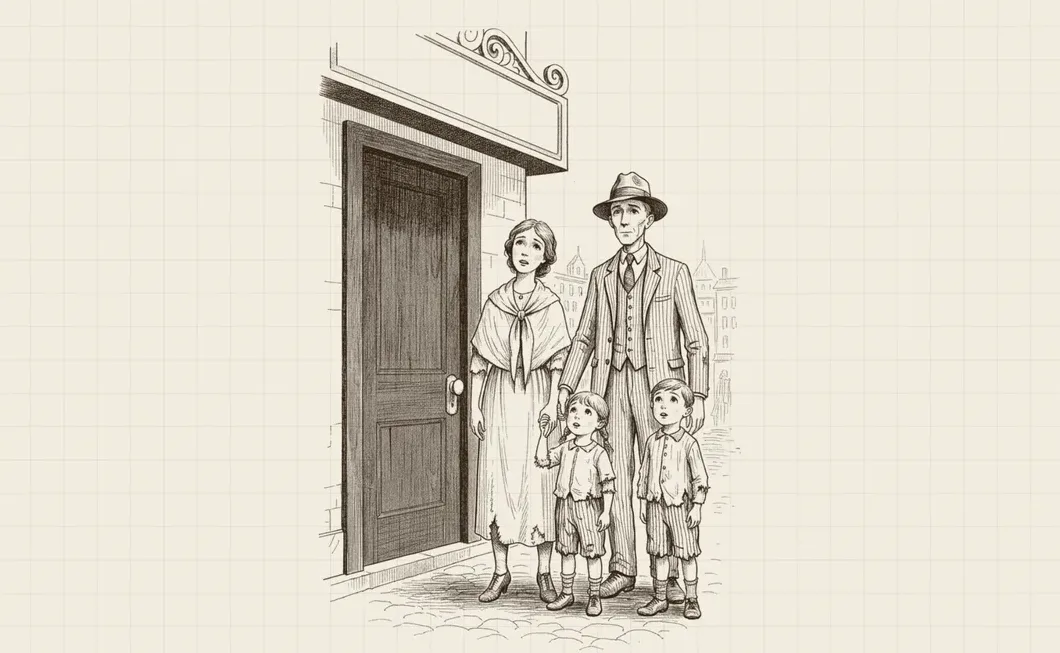
Illustration: Problem & customer
Problem & customer 1 / 7
Families seeking wholesome entertainment faced an industry where animation was dismissed as low-quality novelty and creators could lose everything to distributors who owned their characters.
Problem
The pain in the market
  • Animation was seen as low-quality novelty entertainment with slapdash two-dimensional characters and outrageous action rather than genuine storytelling s1
  • Film studios had no control over their intellectual property or distribution—creators could lose everything to distributors who owned characters and signed away talent s1
  • Entertainment products had short lifecycles and dated quickly, requiring constant new production with uncertain returns and no residual value s1
  • The motion picture industry viewed new media like television as a threat to fight or ignore rather than an opportunity to reach audiences directly s1
Customer
Who lives with that pain
  • Families with children seeking wholesome entertainment, particularly during the Great Depression when underdog stories resonated—Mickey Mouse became a national symbol with 1 million Mickey Mouse Club members s1
  • Multi-generational audiences renewing every 7 years as new children reached theater age—25 million new potential viewers between Snow White releases s1
  • Consumers wanting tangible connections to beloved characters through merchandise—2.5 million Mickey Mouse watches sold in two years, $300 million in Davy Crockett merchandise s1
  • Theme park visitors seeking extended immersive experiences—Disneyland drew 83 million TV viewers at opening, 1 million visitors in two months, surpassing Grand Canyon and Yellowstone by year two s1
Illustration: Value & solution
Value & solution 2 / 7
Timeless animated characters audiences connect with across generations—''practically eternal''—delivered through an IP flywheel of new creation, distribution, ancillary nodes, and strategic re-releases every seven years via ''the vault.''
Unique value proposition
The belief the brand is built on
  • Timeless animated characters with genuine personality that audiences emotionally connect with across generations—'Our product is practically eternal' unlike dated live-action films s1
  • Pioneering synchronized sound animation where humor comes from character rather than outrageous action, creating 'rounded humanized figures' audiences could relate to s1
  • No-compromise quality philosophy: 'go for broke, shoot the works. There would be no compromise on money, talent, or time' to create authentic masterpieces s1
Solution
How that belief reaches the market
  • Intellectual property flywheel: Create compelling new animated IP, maximize distribution in primary medium, feed into ancillary profitable nodes, strategic re-releases every 7 years via 'the vault' s1
  • Synchronized sound animation technology enabling frame-by-frame precision where 'what was happening in real time in the cartoon was then played in sound,' creating illusion of life s1
  • Television as direct distribution bypassing middlemen: 'television is going to be my way of going direct to the public, bypassing the middleman' s1
  • Theme parks that triple time spent and per-capita spending by being 'such a pleasant place, people stayed there longer' while serving as both amplification and monetization for IP s1
Illustration: Channels
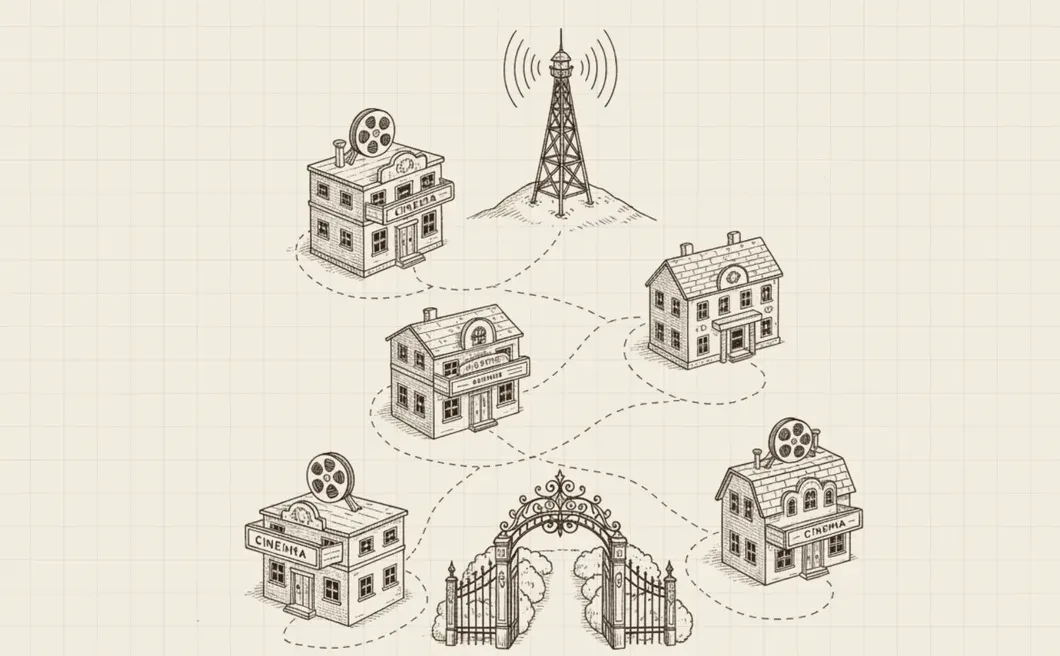
Channels 3 / 7
Disney reached audiences through theatrical distribution, television broadcasting that drew nearly half of America, merchandise licensing onto retail shelves, and theme parks as direct-to-consumer destinations.
  • Theatrical distribution with exhibitor splits: 65% to theater, 13% to distributor, 22% to studio—Snow White's $8M rental implied $20M+ total box office s1
  • Television broadcasting reaching mass audiences—Disneyland opening broadcast reached 83 million viewers (nearly half of America), largest live telecast ever s1
  • Merchandise licensing through partners like Kay Kamen, reaching retail shelves with products from Ingersoll watches to coonskin caps s1
  • Theme parks as direct-to-consumer physical destinations—160,000 visitors first week, becoming America's most popular park surpassing Grand Canyon and Yellowstone s1
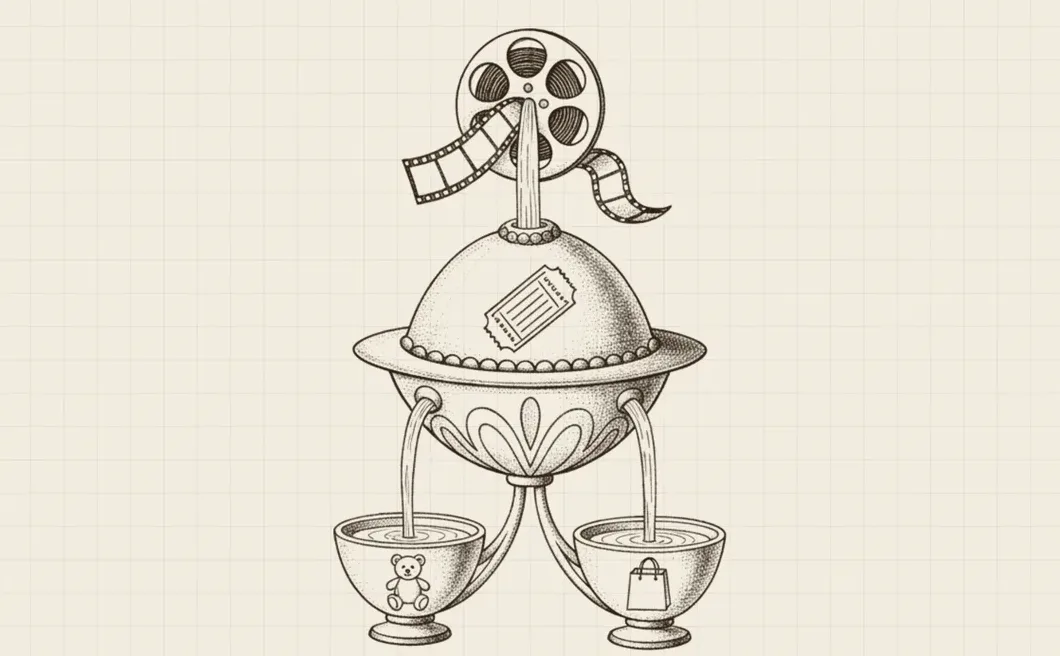
Illustration: Revenue
Revenue 4 / 7
Money came from many nodes: merchandise royalties, theatrical rentals, park admissions and sponsorships, television contracts, and low-cost vault re-releases every seven years.
  • Merchandise licensing generating ~5% royalties on wholesale—by 1935 earning more from merchandise ($70M gross sales, ~$1.75M to Disney) than from films s1
  • Theatrical film rentals comprising 22% of box office after exhibitor and distributor cuts—Snow White earned $8M in rental revenue for studio/distributor share s1
  • Theme park admissions, concessions, and corporate sponsorships—Disneyland opened with 65 sponsors including Coca-Cola, Pepsi, Bank of America, Kodak s1
  • Television programming contracts—ABC paid $5M/year for 7 years (largest TV contract in history) plus $500k equity and $4.5M loan guarantees for Disneyland show s1
  • Vault re-releases every 7 years with minimal cost—Snow White's 1944 re-release brought $3M revenue on 'just a few hundred thousand in cost' since film already existed s1
Illustration: Costs
Costs 5 / 7
Running it meant animation production budgets, a 65% exhibitor share leaving only 22% for the studio, 50/50 licensing splits, and theme park construction and operations funded partly by ABC.
  • Animation production budgets ranging from $15,000-$30,000 for cartoon shorts in mid-1930s, escalating to unprecedented scale for features s1
  • Theater exhibitor revenue share taking 65% of box office, plus 13% to distributor, leaving only 22% for studio from theatrical releases s1
  • Merchandise licensing partner splits—50/50 revenue share with Kay Kamen from the ~5% royalties collected on wholesale merchandise sales s1
  • Theme park construction and operations—ABC provided $500k equity, guaranteed $4.5M in loans, and received all food & beverage profits for first decade in exchange for funding s1
Illustration: Key metrics
Key metrics 6 / 7
Proof it worked: one million Mickey Mouse Club members across 800 clubs—more than Boy and Girl Scouts combined—plus soaring merchandise sales and parks becoming the profit engine.
  • Mickey Mouse Club membership reached 1 million members across 800 clubs nationwide—more than Boy and Girl Scouts of America combined—demonstrating audience engagement s1
  • Merchandise gross sales: $70M in 1935, $300M from Davy Crockett products alone in 1955, with typical 5% wholesale royalties split 50/50 with licensing partner s1
  • Time spent in park driving revenue—Disneyland tripled per-capita expenditures versus competitors by tripling time guests stayed due to pleasant experience s1
  • Business unit profitability by 1972: Films $78M revenue/$44M profit; Parks $223M revenue/$38M profit; Other flywheel $27M revenue/$13M profit—parks becoming profit engine s1
Illustration: Unfair advantage
Unfair advantage 7 / 7
Eternal IP that never ages, obsessive ownership learned from the Oswald betrayal, and an integrated flywheel where film, parks, and merchandise compound each other—none easily copied.
  • Eternal animated IP that never ages, works for free with no profit participation, and can be re-released every generation—'practically eternal' versus dated live-action s1
  • Obsessive IP ownership and control learned from Oswald betrayal—ensuring Disney owned all characters, contracted talent directly, and controlled distribution to prevent enterprise value from reaching 'effectively zero' s1
  • Integrated flywheel business model where 'diversified activities are related and tend to complement each other'—film feeds parks, parks amplify film, merchandise monetizes both, creating compounding network effects s1
  • First-mover advantage in synchronized sound animation, feature-length animation, and animation-to-theme-park model—technology and format innovations competitors couldn't easily replicate at Disney's quality standard s1
The receipts

Every claim, tethered to a real source

  1. s1Acquired.fm — https://www.youtube.com/watch?v=7EUVr0-V6DA&t=3s
  2. s2Walt Disney Wikipedia — https://en.wikipedia.org/wiki/Walt_Disney
  3. s3Disney company background — https://en.wikipedia.org/wiki/The_Walt_Disney_Company