View as cards
Fanatics cover
An open-source case, told as a story

Fanatics

The founder story of Michael Rubin, in 10 beats — then how the business actually works.

Scroll↓
About this case

Welcome to the open-source case for Fanatics. This is a company whose founder, Michael Rubin, was negotiating baseball card consignment deals at nine and running a ski-tuning shop out of his parents' basement by twelve—an entrepreneurial instinct that grew into a comprehensive global sports platform reimagining how fans connect with the teams, athletes, and moments they love. What makes this story worth the treatment is the ambition of the integrated ecosystem: fan gear, collectibles, betting, and content brought together under one roof, anchored by a Fanatics Commerce business that generates $6.2 billion, or 77% of 2024 revenue.

Four lenses · four acts
Act One

How Fanatics came to be

First the arc at a glance, then the story in 10 drawn beats.
The arc · 7 milestones
  1. 1
    Basement ski shop at 12

    A precocious Philadelphia kid negotiated card deals and opened a ski-tuning shop in his parents' basement. s2s3

  2. 2
    $2.4B eBay exit

    Rubin scaled GSI Commerce into a digital powerhouse, becoming a young NASDAQ CEO before selling to eBay. s2

  3. 3
    Fanatics is born (2011)

    He launched Fanatics to reimagine fandom—merch, collectibles, cards, betting, and content in one ecosystem. s1s4

  4. 4
    The licensing moat

    Exclusive 15-20 year league deals gave Fanatics ~35% of US licensed merch and towering entry barriers. s7

  5. 5
    Margins & 100M fans

    Vertical integration pushed margins past 40% and built a 100M-fan database for cross-selling. s7

  6. 6
    $8.1B across three arms

    By 2024 revenue hit $8.1B—commerce, collectibles, and betting—on a cash-rich balance sheet. s5

  7. 7
    $31B sports empire

    Valued at $31B with global backing, Rubin built a platform reshaping how fans experience sports. s1s4s6
Now the fuller story, drawn beat by beat↓
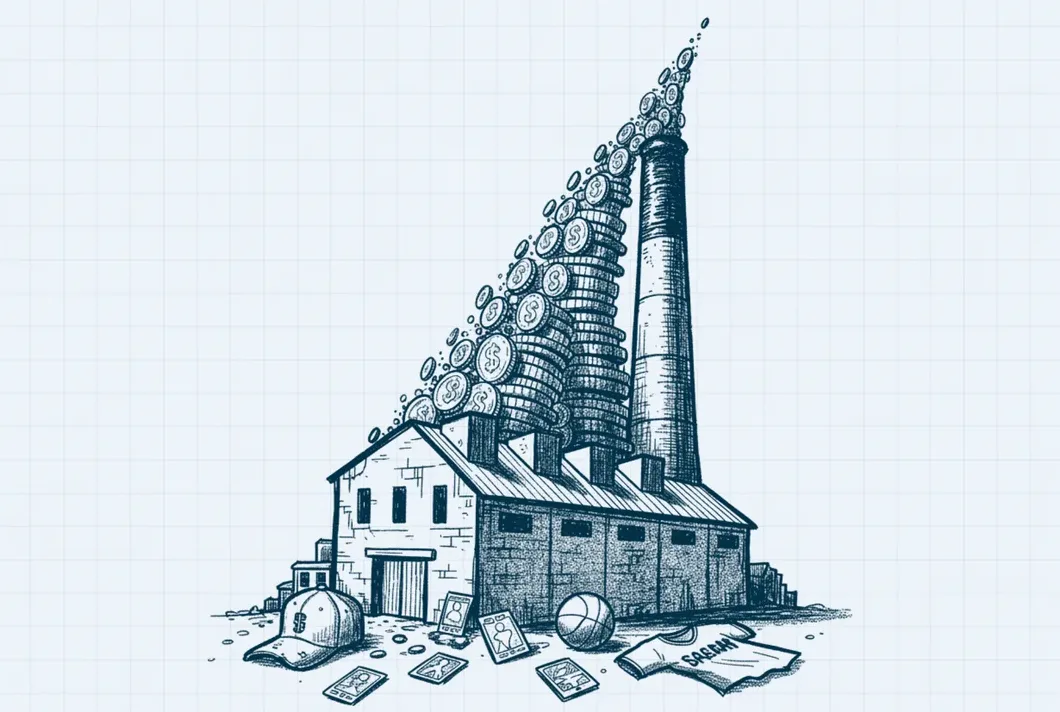
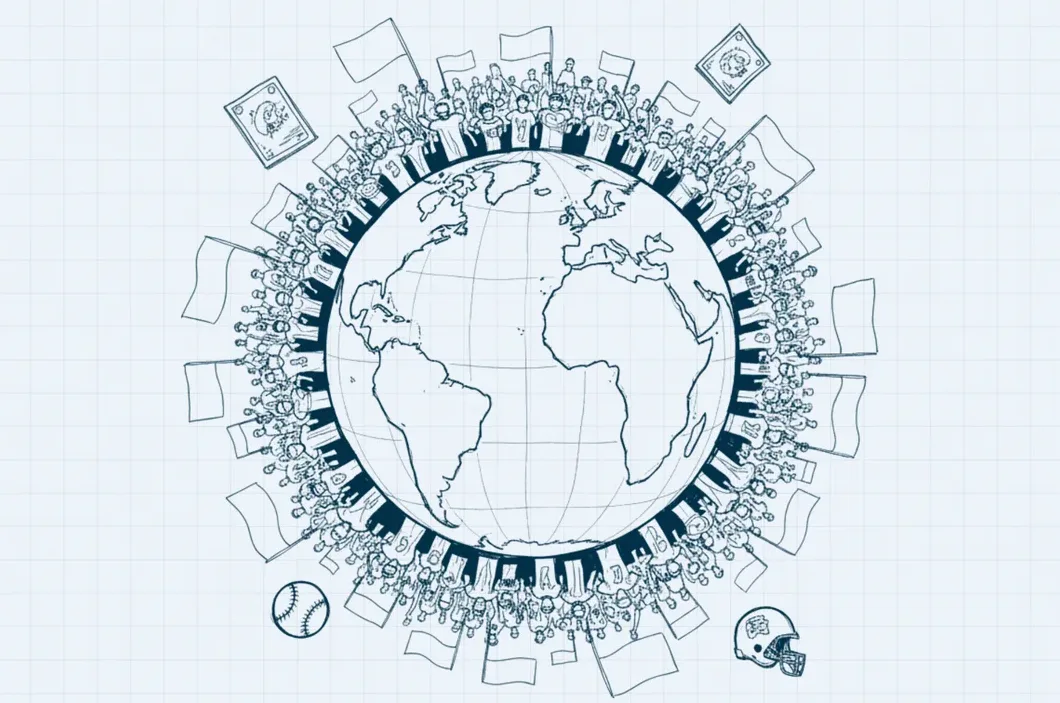
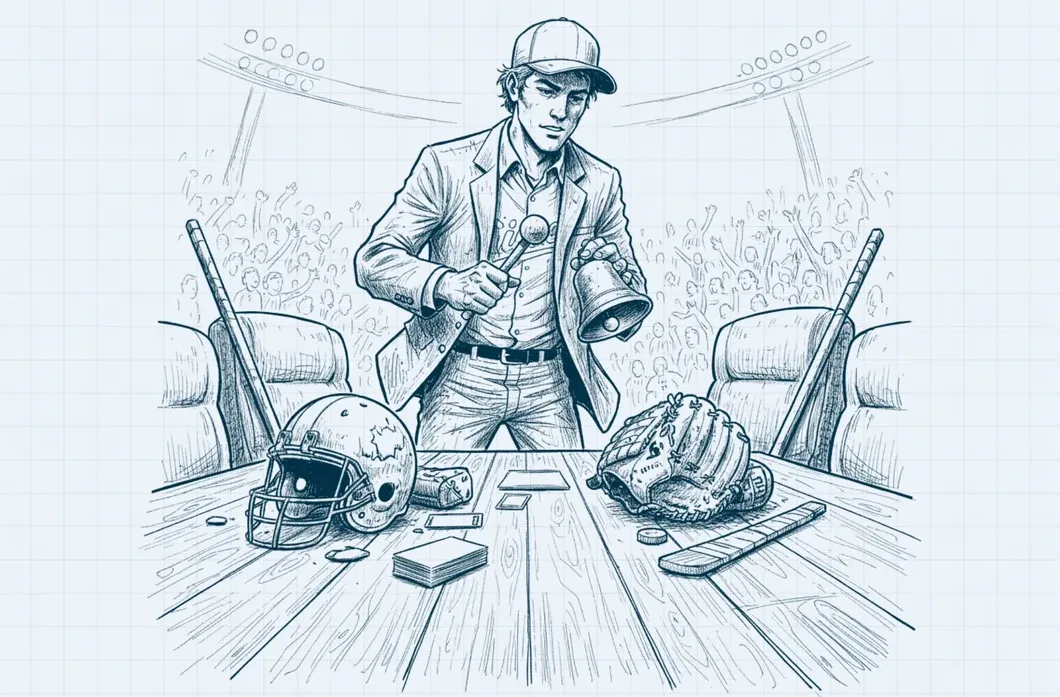
Illustration: Once upon a time...
01 / 10
Once upon a time...

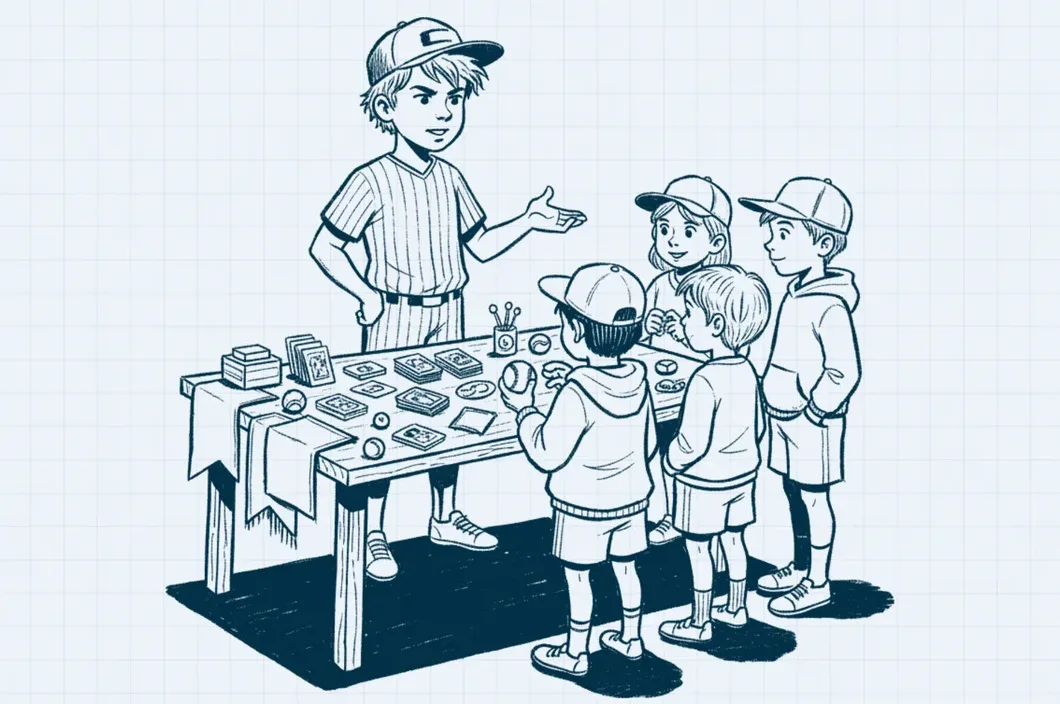
There was a boy in Philadelphia who spoke like no other nine-year-old. When Michael Rubin went to overnight camp, he negotiated consignment deals for baseball cards and boldly told a neighbor, 'we should negotiate my fee.' His mother marveled at the unusual precociousness. By age 12, he had opened a ski-tuning shop in his parents' basement, launching an entrepreneurial journey that would span decades.

“When Michael was 9 he went to overnight camp for the first time...he got on the phone with a friend of my oldest daughter's...wanted to talk with him about taking them on consignment to camp with him...and Michael went over to his house and I heard him say, 'And we should negotiate my fee.' Nine-year-olds just don't talk like that.”
s2s3
Illustration: Every day...
02 / 10
Every day...

Rubin built companies with relentless focus. He became one of the youngest CEOs ever of a NASDAQ-listed company at age 25. Over 12 years, he grew GSI Commerce into a digital marketing powerhouse servicing 150 of the top 500 internet retailers, ultimately selling to eBay for $2.4 billion. He understood e-commerce infrastructure, marketplace dynamics, and how to scale platforms that connected brands to millions of customers.

“At age 25, Rubin became one of the youngest CEOs ever of a NASDAQ-listed company.”
s2
Illustration: One day...
03 / 10
One day...

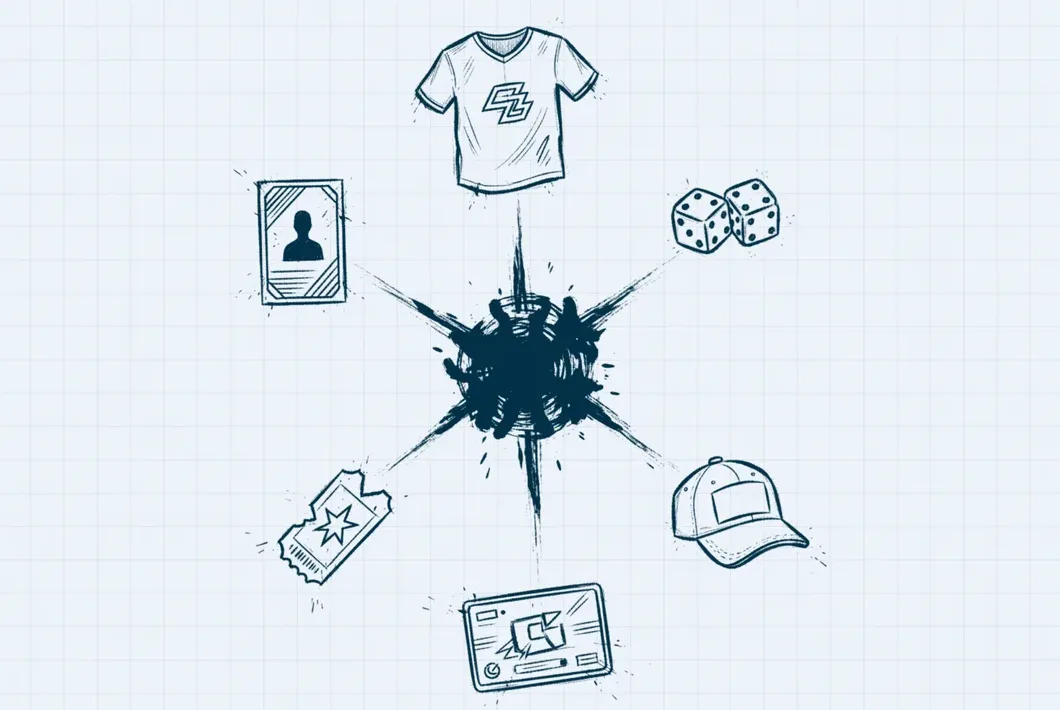
In 2011, Rubin founded Fanatics, starting as a small online retailer of sports merchandise and apparel. He saw an opportunity to reimagine how sports fans experienced their passion—not just buying jerseys, but engaging across merchandise, collectibles, trading cards, betting, and content in one integrated ecosystem.

“Since founding Fanatics in 2011, Michael Rubin has built the company from a small online retailer of sports merchandise and apparel into a massive global sports platform.”
s1s4
Illustration: Because of that...
04 / 10
Because of that...

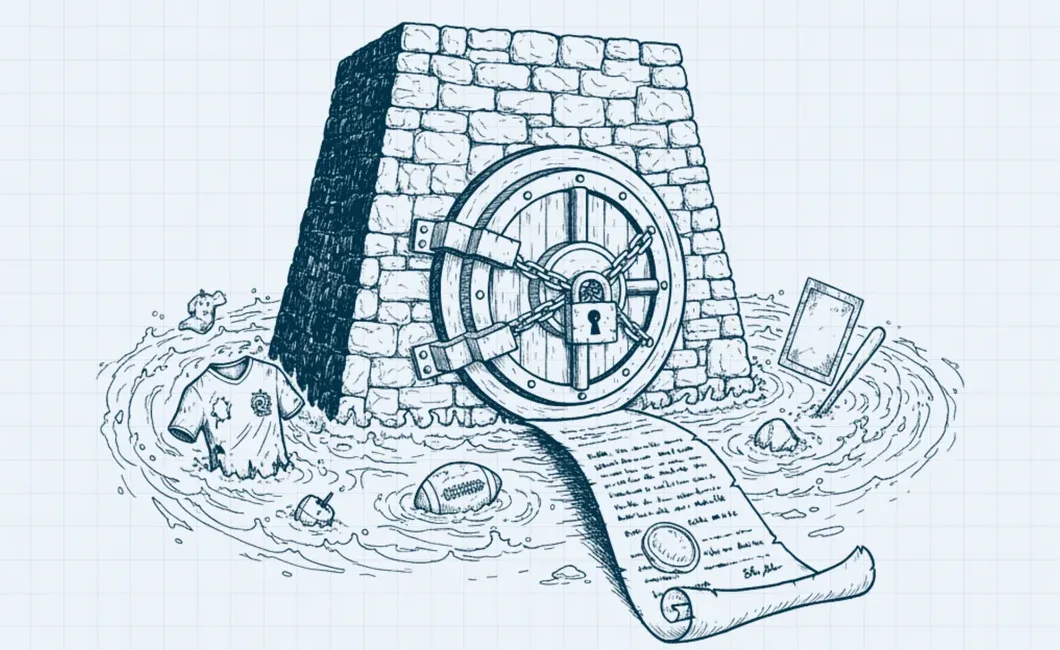
Fanatics built a powerful vertically integrated model, securing exclusive long-term licensing deals lasting 15-20 years with major sports leagues. This created towering barriers to entry for competitors and gave Fanatics control over approximately 35% of licensed sports merchandise sales in the US—a commanding position in a fragmented market.

“Fanatics has built a powerful vertically integrated model in sports merchandise, controlling approximately 35% of licensed sports merchandise sales in the US.”
s7
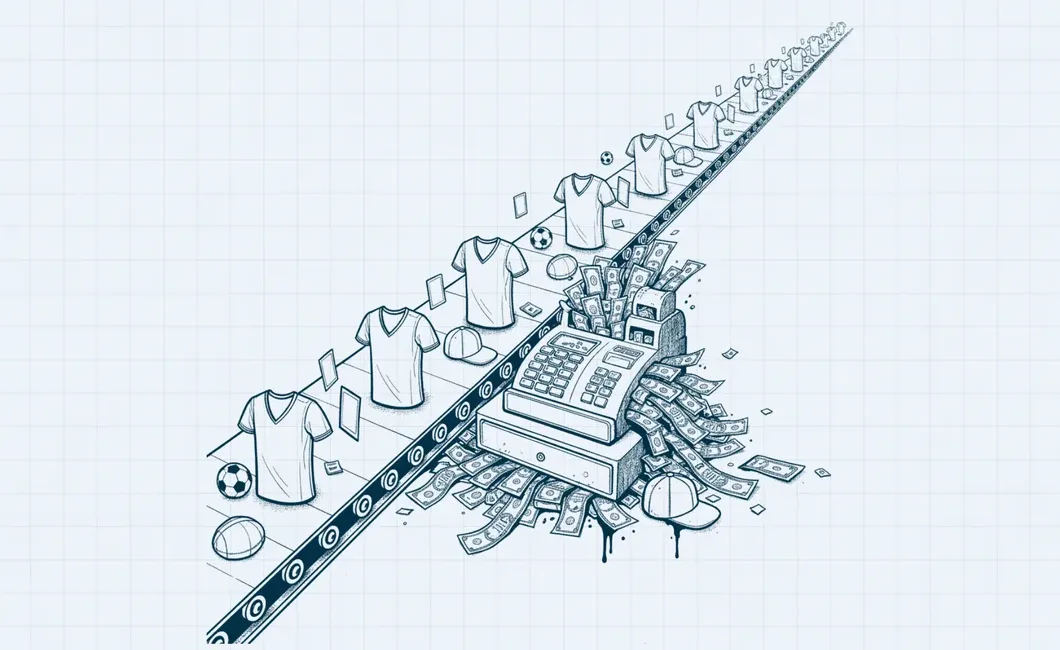
Illustration: Because of that...
05 / 10
Because of that...

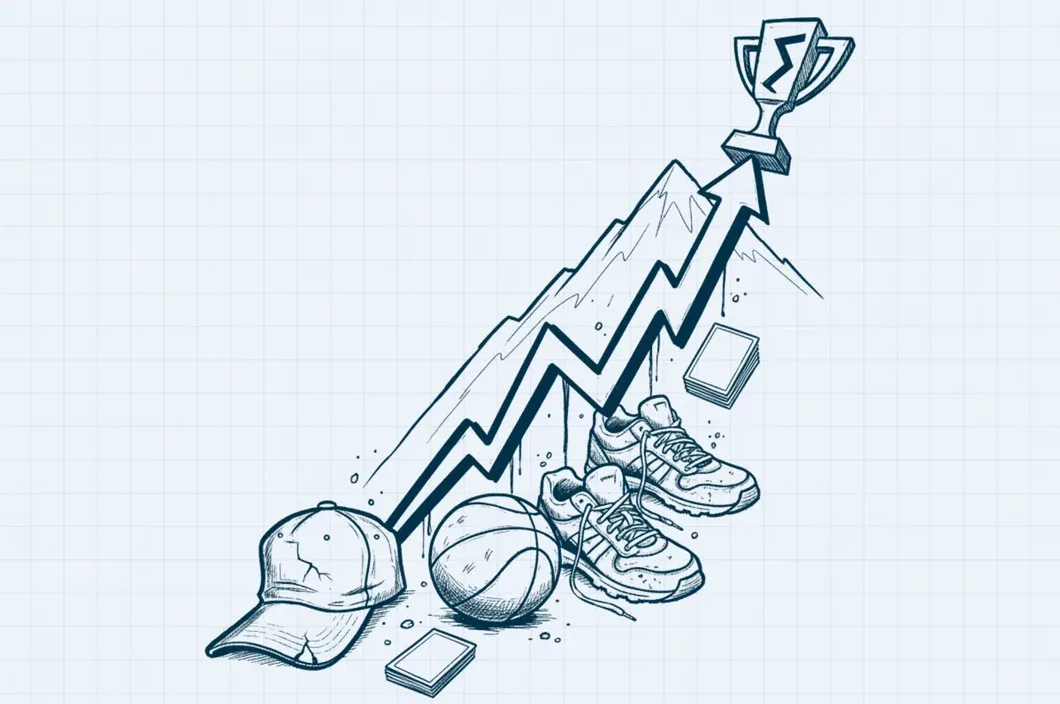
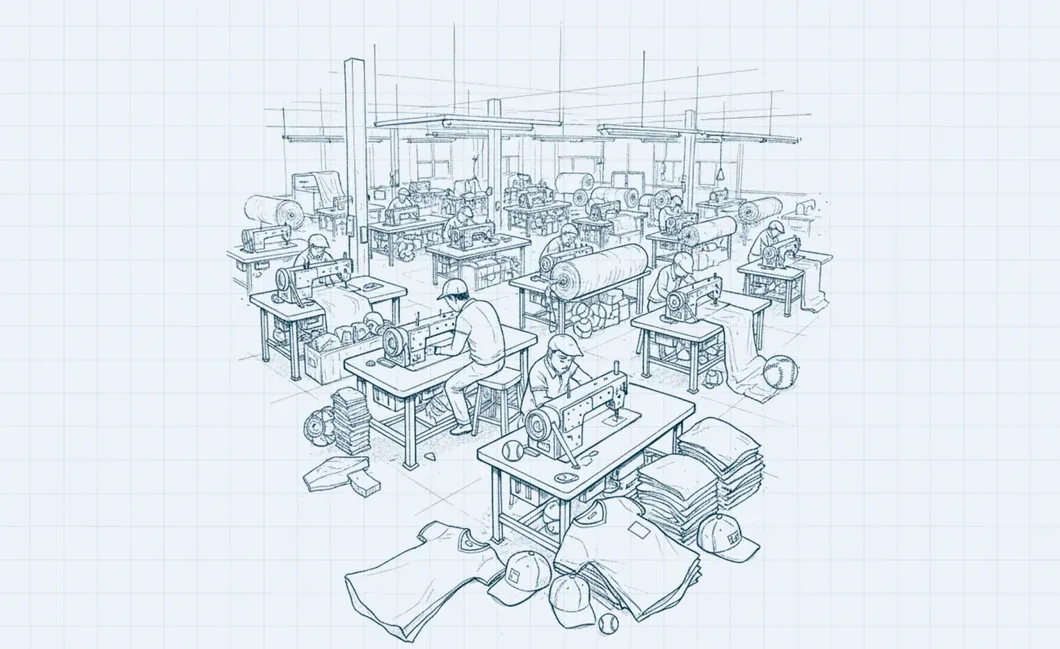
The economics transformed. By owning manufacturing and distribution, Fanatics achieved gross margins exceeding 40%—more than double traditional retail's 15-20%. The company built a database of over 100 million sports fans, creating a massive customer acquisition advantage and enabling cross-selling across multiple revenue streams.

“With 40%+ gross margins compared to traditional retail's 15-20%, Fanatics has significant cash flow.”
s7
Illustration: Because of that...
06 / 10
Because of that...

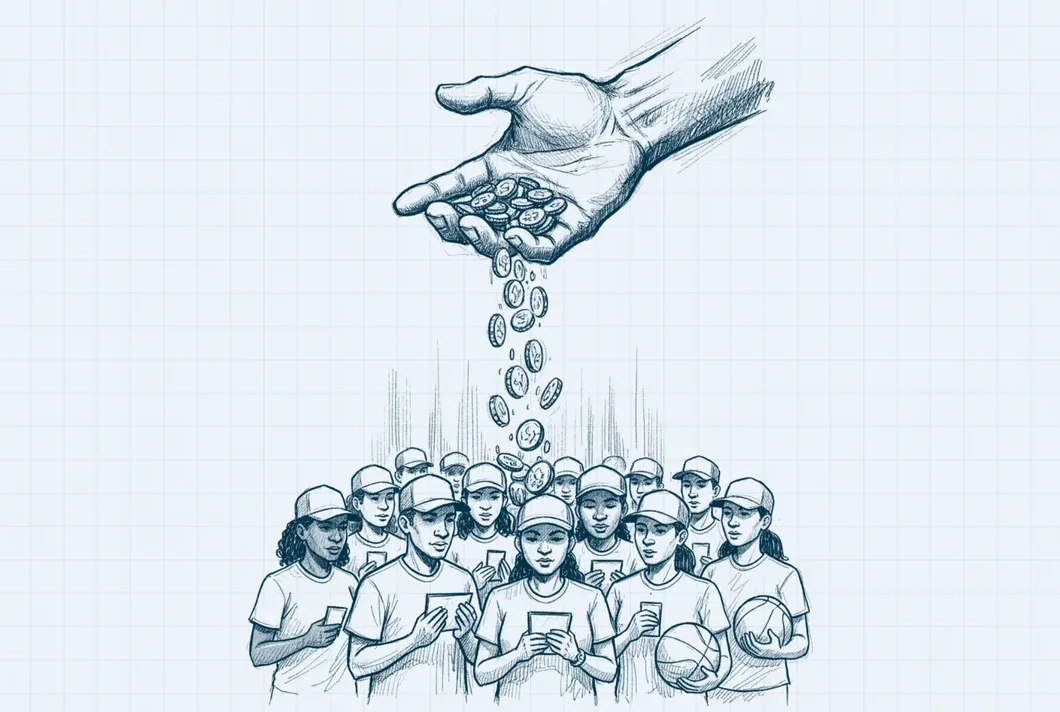
Revenue exploded across three segments. In 2024, Fanatics Commerce generated $6.2 billion (77% of total revenue), Fanatics Collectibles brought in $1.6 billion, and Fanatics Betting & Gaming contributed $300 million. Total revenue grew 15% to $8.1 billion, with retail and trading cards showing particular strength. The company maintained a fortress balance sheet with about $1 billion in cash and only $400 million in debt.

“Fanatics Commerce represented about $6.2 billion (77% of total), Fanatics Collectibles brought in about $1.6 billion, and Fanatics Betting & Gaming was about $300 million.”
s5
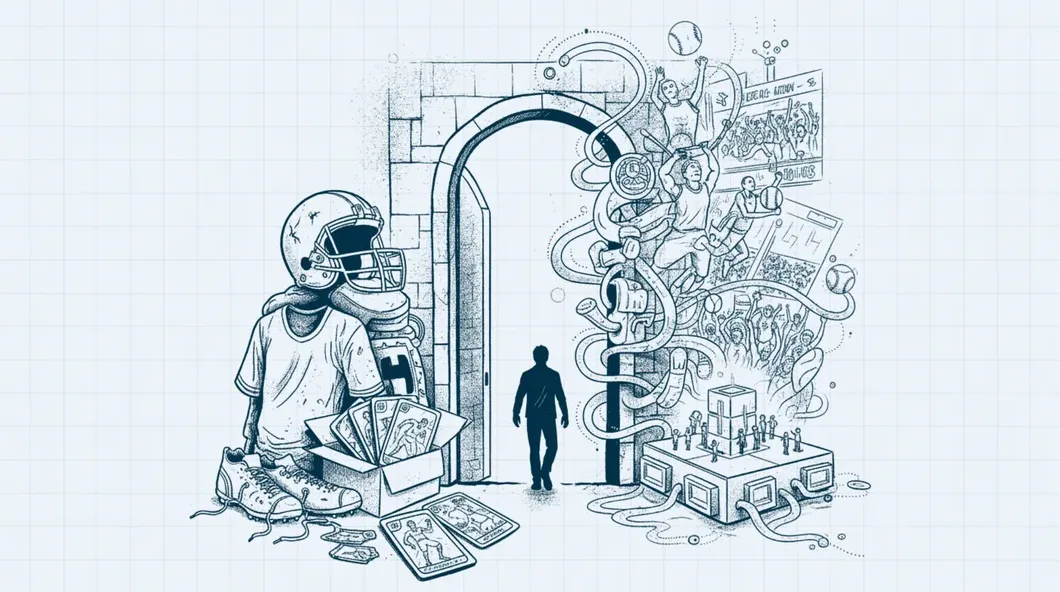
Illustration: Until finally...
07 / 10
Until finally...

Fanatics became one of the most valuable sports companies in the world, valued at $31 billion in December 2022 after a $700 million funding round led by Clearlake Capital, with backing from SoftBank, Silver Lake, and Fidelity. With 22,000+ employees, 80 offices globally, and projected revenue approaching $14 billion in 2026, Rubin had built a global sports platform that reimagined the entire fan experience.

“With 22,000+ employees, 80 offices globally, and ~$13 billion expected in revenue in 2026, Fanatics is currently one of the most valuable sports companies in the world.”
s1s4s6
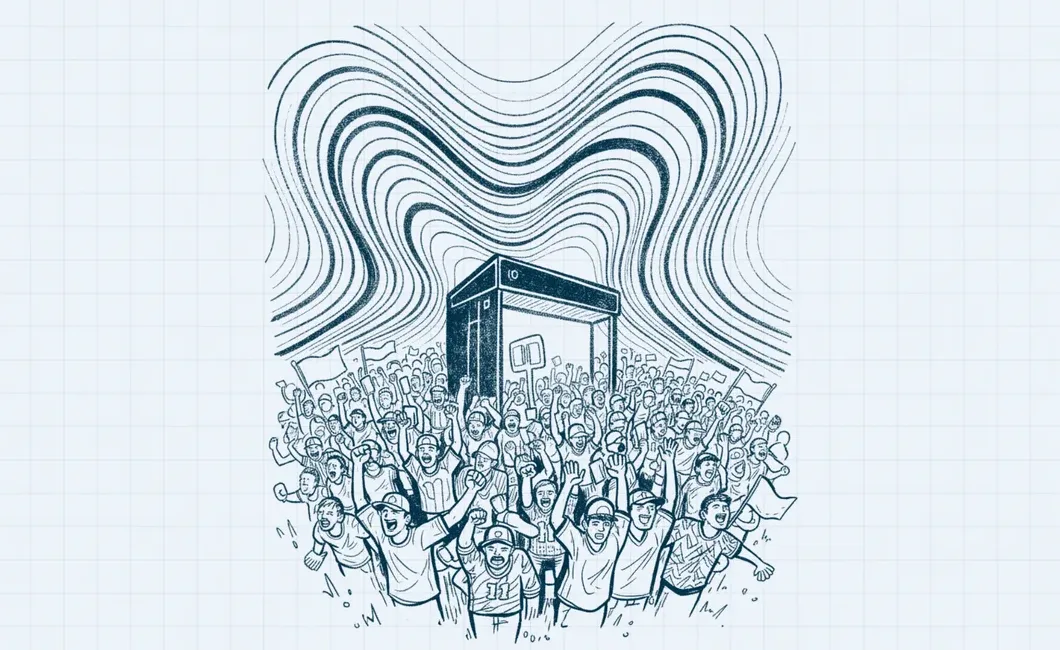
Illustration: And every day after that...
08 / 10
And every day after that...

Fanatics continues to expand its platform across fan gear, collectibles, trading cards, sports betting, content, and media. The company serves over 100 million sports fans through an integrated ecosystem that touches nearly every aspect of sports fandom, leveraging its exclusive licensing relationships and vertical integration to maintain competitive advantages.

s1s7
Illustration: Reflection / realization
09 / 10
Reflection / realization

Rubin believes entrepreneurs who create great value carry a responsibility to give back. He advocates for more pressure on wealthy founders to deploy philanthropic capital, trusting entrepreneurs over government to achieve meaningful results. The nine-year-old who negotiated consignment fees became a billionaire founder who sees wealth creation and social impact as intertwined obligations.

“There has to be more pressure on entrepreneurs, when they create great value, to give back. I always bank on an entrepreneur to give back and get great results versus giving that same money to the government.”
s8
Illustration: The journey today
10 / 10
The journey today

Today, Fanatics operates as a global sports platform reimagining how hundreds of millions of fans engage with the sports they love. From a Philadelphia basement ski shop to a $31 billion sports empire, Michael Rubin's journey embodies the relentless entrepreneurial instinct he showed at age nine—building, negotiating, scaling, and ultimately reshaping an entire industry around the fan experience.

s1s2s3s6
Act Two

Why it exists

Start at the belief at the center — then the circle zooms out through the method and the offer.

WHY

Fanatics exists to reimagine the fan experience—to transform how sports fans connect with the teams, athletes, and moments they love across every dimension of their passion. The company believes that fans deserve more than transactional commerce; they deserve an integrated platform that serves them at every touchpoint of their sports journey, from the jersey they wear to the cards they collect to the games they bet on.

s1
HOW

Fanatics differentiates itself through a powerful vertically integrated model that controls the entire value chain—from exclusive long-term licensing deals (15-20 years) with major leagues to direct manufacturing and distribution. This integration delivers 40%+ gross margins compared to traditional retail's 15-20%, creating significant cash flow advantages and high barriers to entry for competitors. The company leverages a database of over 100 million sports fans to create a massive customer acquisition advantage, enabling it to serve fans across multiple touchpoints in the sports ecosystem—merchandise, collectibles, betting, and content—all within a unified platform.

s7s1
WHAT

Fanatics is a global sports platform that operates through three primary revenue segments: Fanatics Commerce ($6.2 billion in 2024, 77% of total revenue), which sells licensed sports merchandise and apparel; Fanatics Collectibles ($1.6 billion), focused on trading cards and collectibles; and Fanatics Betting & Gaming ($300 million), offering sports betting and prediction markets. The company also provides content and media services. With 22,000+ employees, 80 offices globally, and approximately $8.1 billion in revenue in 2024 (projected to approach $14 billion in 2026), Fanatics serves over 100 million sports fans and controls approximately 35% of licensed sports merchandise sales in the US.

s1s5s4s7
Act Three

Who it serves

Step into one customer’s world — the person the whole business is built around.

Illustration of Jake the Sports Superfan
Meet
Jake the Sports Superfan
32-year-old Marketing Manager
An avid sports enthusiast who follows multiple leagues (NFL, NBA, MLB), collects memorabilia, and regularly engages with sports through merchandise purchases, trading cards, and sports betting
What they SEESees
A massive global platform—80 offices, 100M+ fans—posting 15% growth to $8.1B in 2024, with founder Michael Rubin talking strategy on CNBC.
from the empathy map
  • A massive global sports platform with 80 offices worldwide and over 100 million sports fans in their database s1s7
  • Strong growth momentum with 15% revenue growth to $8.1 billion in 2024, particularly in retail and trading cards s5
  • Founder Michael Rubin actively promoting the company on major media outlets like CNBC, discussing sports industry and company strategy s4s2
What they HEARHears
Fanatics is rapidly expanding toward ~$14B, controls ~35% of US licensed merch with exclusive league deals, and is valued at $25-31 billion.
from the empathy map
  • Fanatics is rapidly growing and expanding across multiple sports categories with projected revenue approaching $14 billion s4
  • The company controls approximately 35% of licensed sports merchandise sales in the US with exclusive league partnerships s7
  • Fanatics is valued at $25-31 billion and is one of the most valuable sports companies in the world s6s1
What they SAYSays
"I want authentic licensed gear in one place—jerseys, cards, and betting all in one trusted platform, because they hold every major league deal."
from the empathy map
  • I want authentic, officially licensed gear from my favorite teams all in one place s7s1
  • It's convenient to handle all my sports interests—buying jerseys, collecting cards, and betting—through a single trusted platform s1
  • Fanatics has become my go-to for everything sports-related because they have exclusive deals with all the major leagues s7
What they DODoes
Buys merch on Fanatics online, collects cards and places bets across its services, and shops the vertically integrated licensed ecosystem.
from the empathy map
  • Purchases sports merchandise and apparel through Fanatics' online platform s1s4
  • Engages with multiple Fanatics services including buying collectibles, trading cards, and participating in sports betting s1
  • Shops across Fanatics' vertically integrated ecosystem, benefiting from exclusive licensed merchandise from major sports leagues s7
Act Four

How it makes money

The business model in seven moves — each one drawn, each one cited.
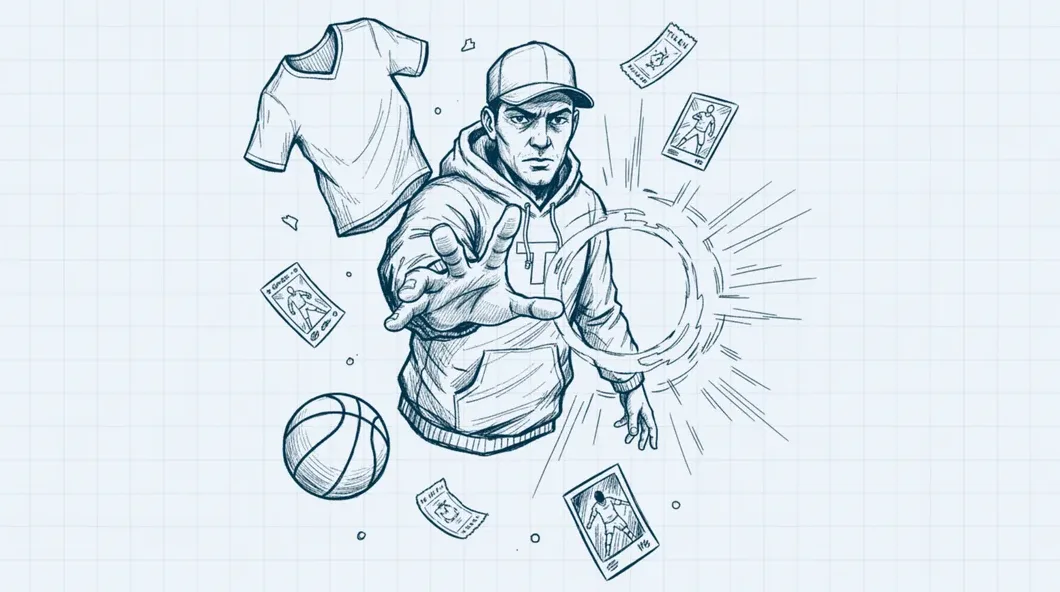
Illustration: Problem & customer
Problem & customer 1 / 7
Sports fans, collectors, and bettors across every major league once had their fandom scattered across fragmented providers—no single integrated platform to buy gear, collect memorabilia, and play, all while traditional retail crawled along on thin 15-20% margins.
Problem
The pain in the market
  • Sports fans lacked a comprehensive, integrated platform to engage with multiple aspects of their sports fandom—purchasing merchandise, collecting memorabilia, and accessing sports-related content and entertainment were fragmented across different providers. s1
  • Traditional sports retail operated with low gross margins (15-20%), limiting investment in fan experience and creating inefficiencies in the value chain. s7
  • Sports merchandise retail was fragmented without a dominant player controlling the end-to-end experience from licensing through manufacturing to direct consumer sales. s7
Customer
Who lives with that pain
  • Sports fans across all major leagues and sports who purchase licensed merchandise and apparel. s1s7
  • Sports collectors and enthusiasts seeking trading cards and collectibles. s1s5
  • Sports bettors and gamers looking for prediction markets and betting opportunities. s1s5
Illustration: Value & solution
Value & solution 2 / 7
One integrated global sports platform unites fan gear, collectibles, betting, and content—delivered through Fanatics Commerce, Collectibles, and Betting & Gaming on a vertically integrated model commanding ~35% of US licensed merchandise at 40%+ margins.
Unique value proposition
The belief the brand is built on
  • A comprehensive global sports platform that reimagines the fan experience across fan gear, collectibles, betting, and content—all in one integrated ecosystem. s1
  • Vertically integrated model controlling approximately 35% of licensed sports merchandise sales in the US with 40%+ gross margins, enabling superior value delivery to fans. s7
Solution
How that belief reaches the market
  • Fanatics Commerce: a vertically integrated e-commerce platform for licensed sports merchandise and apparel across all major leagues. s5s7
  • Fanatics Collectibles: a comprehensive platform for sports trading cards and collectible memorabilia. s1s5
  • Fanatics Betting & Gaming: sports betting and prediction market platform integrated with the broader sports fan ecosystem. s1s5
  • Content and media offerings that engage fans across multiple touchpoints in the sports ecosystem. s1
Illustration: Channels
Channels 3 / 7
A direct-to-consumer e-commerce engine reaches over 100 million fans in the database, powered by a global network of 80 offices and cross-selling digital platforms spanning commerce, collectibles, betting, and media.
  • Direct-to-consumer e-commerce platform reaching over 100 million sports fans in the database. s1s7
  • Global distribution network with 80 offices worldwide supporting 22,000+ employees. s1
  • Integrated digital platforms spanning commerce, collectibles, betting, and media that cross-sell and engage fans across multiple categories. s1
Illustration: Revenue
Revenue 4 / 7
Revenue flows from three engines—$6.2B Commerce, $1.6B Collectibles, and $300M Betting & Gaming—driving total 2024 revenue up 15% to $8.1 billion, with projections approaching $14 billion in 2026.
  • Fanatics Commerce generates $6.2 billion (77% of total 2024 revenue) from licensed sports merchandise and apparel sales. s5
  • Fanatics Collectibles generates $1.6 billion from trading cards and sports collectibles. s5
  • Fanatics Betting & Gaming generates $300 million from sports betting and prediction markets. s5
  • Total company revenue grew 15% in 2024 to $8.1 billion, with projections approaching $14 billion in 2026. s4s5
Illustration: Costs
Costs 5 / 7
Running it means vertically integrated manufacturing, long-term 15-20 year league licensing fees, a global footprint of 22,000+ employees across 80 offices, and platform tech—yet still yielding 40%+ margins versus retail's 15-20%.
  • Manufacturing and operations costs for vertically integrated production of licensed sports merchandise, though generating superior 40%+ gross margins versus traditional retail's 15-20%. s7
  • Licensing fees paid to major sports leagues under exclusive long-term agreements (15-20 years). s7
  • Global operational infrastructure supporting 22,000+ employees and 80 offices worldwide. s1
  • Technology and platform development costs for e-commerce, collectibles, betting, and media platforms. s1
Illustration: Key metrics
Key metrics 6 / 7
$8.1 billion in 2024 revenue, up 15% and headed toward ~$14B by 2026, backed by 100M+ fans, ~35% US market share, and a strong balance sheet of ~$1B cash against just $400M debt.
  • Total revenue of $8.1 billion in 2024, growing 15% year-over-year, with projections approaching $14 billion in 2026. s4s5
  • Database of over 100 million sports fans representing massive customer acquisition advantage. s7
  • Market share of approximately 35% of licensed sports merchandise sales in the US. s7
  • Strong balance sheet with about $1 billion in cash and only $400 million in total debt as of end of 2024. s5
Illustration: Unfair advantage
Unfair advantage 7 / 7
Exclusive 15-20 year league deals wall out rivals, a vertically integrated model throws off 40%+ margins versus retail's 15-20%, and 100M+ fans plus ~35% US share compound into network effects no one can copy.
  • Exclusive long-term licensing deals (15-20 years) with major sports leagues create high barriers to entry for competitors. s7
  • Vertically integrated manufacturing and distribution model delivering 40%+ gross margins compared to traditional retail's 15-20%, generating significant cash flow advantages. s7
  • Database of over 100 million sports fans providing massive customer acquisition and cross-selling advantages across commerce, collectibles, and betting segments. s7
  • Market dominance with approximately 35% control of licensed sports merchandise sales in the US, creating network effects and scale advantages. s7
The receipts

Every claim, tethered to a real source

  1. s1Michael Rubin, Founder & CEO — Fanatics Inc (Official Company Bio) — https://www.fanaticsinc.com/michael-rubin
  2. s2Michael Rubin — CNBC Events Speaker Bio — https://www.cnbcevents.com/speakers/michael-rubin/
  3. s3How To Raise A Billionaire: An Interview With Michael Rubin's Mother, Paulette Rubin (Forbes) — https://www.forbes.com/sites/michelatindera/2015/10/02/how-to-raise-a-billionaire-an-interview-with-michael-rubins-mother-paulette-rubin/
  4. s4Fanatics CEO Michael Rubin on two sports businesses his multibillion-dollar conglomerate won't enter (CNBC, July 2026) — https://www.cnbc.com/2026/07/18/fanatics-fanfest-michael-rubin.html
  5. s5Fanatics Revenue Hits $8.1B Amid Push Into Betting, Collectibles (Sportico, January 2025) — https://www.sportico.com/business/finance/2025/fanatics-2024-sales-rise-1234824898/
  6. s6Fanatics: $31.00B valuation [2024] | Sacra — https://sacra.com/c/fanatics/valuation/
  7. s7Fanatics revenue, valuation & funding | Sacra — https://sacra.com/c/fanatics/
  8. s8E-commerce billionaire Michael Rubin: There needs to be 'more pressure' on wealthy to give back (CNBC, December 2019) — https://www.cnbc.com/2019/12/02/billionaire-michael-rubin-we-need-to-press-the-wealthy-to-give-back.html