View as cards
Leatherman Tool Group cover
An open-source case, told as a story

Leatherman Tool Group

The founder story of Tim Leatherman, in 10 beats — then how the business actually works.

Scroll↓
About this case

Welcome to the open-source case for Leatherman Tool Group. This is the story of how a young engineer's fascination with mechanical things—sharpened over two and a half years in Vietnam—grew into the first pliers-based multipurpose tool, a compact foldable set of full-strength pliers that created an entirely new market niche and sold more than one million Pocket Survival Tools on its way past $30 million in revenue by 1993. What makes this company worth the treatment is the conviction beneath the product: that people shouldn't have to choose between capability and portability when problems demand fixing, and that everyone deserves a tool they can trust for decades. To understand it fully, we look through four lenses—the Founder Story of Tim Leatherman and the seed planted abroad, the Golden Circle that names why the company exists and how it tells that story, the Lean Canvas that maps how it makes money through direct sales of multi-tools and knives, and the Empathy Map that brings its customer into focus, from the adventure traveler who values self-reliance to the moments when a Swiss Army knife simply isn't enough.

Act One

How Leatherman Tool Group came to be

First the arc at a glance, then the story in 10 drawn beats.
The arc · 7 milestones
  1. 1
    A tinkerer's Vietnam seed

    Young engineer Tim Leatherman leaves Vietnam with a deep appreciation for tools and problem-solving. s5

  2. 2
    The Tehran sketch

    On a 1975 road trip in a cranky $300 Fiat, Tim sketches a foldable pliers-based multi-tool in Tehran. s1s2s3s4

  3. 3
    Three years of prototypes

    Back home, he crafts prototypes from scavenged metal and files for a patent, then shops the idea around. s1s2s4

  4. 4
    Seven years of rejection

    Company after company says no; after seven years he finally makes a first sale of just $175. s1s2

  5. 5
    Going it alone in '83

    With Steve Berliner he incorporates Leatherman, lands a 500-tool Cabela's order, and ships PSTs by Christmas. s2s6s7s8

  6. 6
    A category explodes

    Word spreads fast: tens of thousands sold, top catalogs on board, and $100M+ revenue by 1993. s7s8

  7. 7
    Still made in Portland

    Today Leatherman still builds American multi-tools in Oregon, backed by a 25-year warranty. s9
Now the fuller story, drawn beat by beat↓
Illustration: Once upon a time...
01 / 10
Once upon a time...

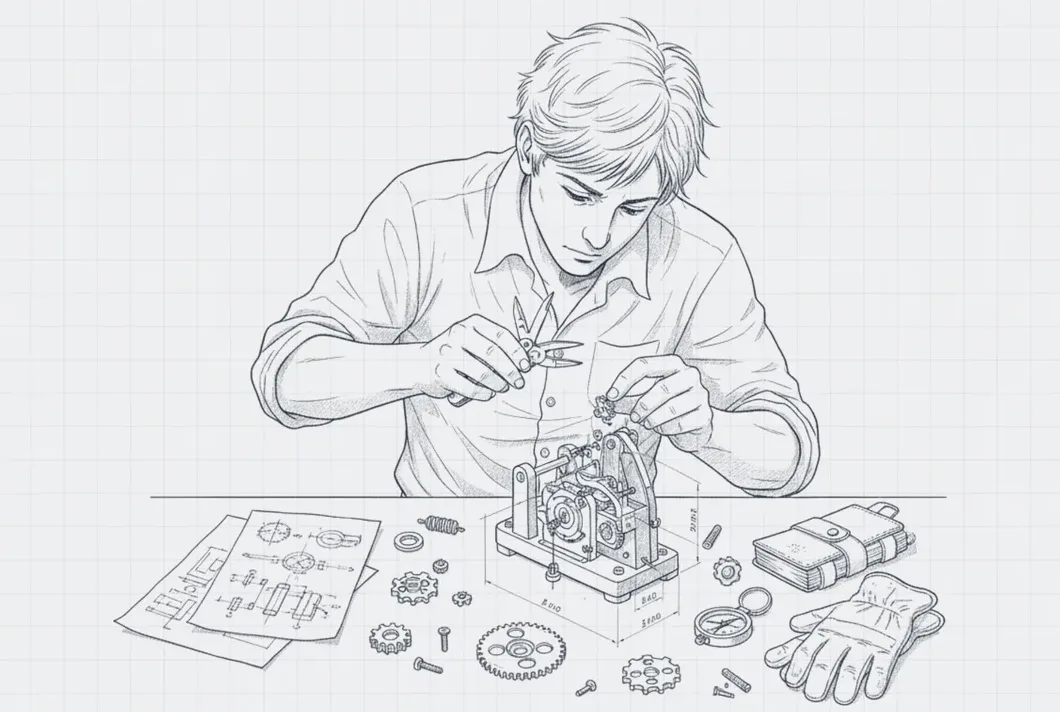
Tim Leatherman was a young engineer fascinated by mechanical things and how they worked. He spent two and a half years in Vietnam, where he developed a keen appreciation for tools and problem-solving—a seed that would eventually grow into something extraordinary.

“What is not often talked about are the two and a half years I spent in Vietnam, prior to that trip. It was there that I began to develop a keen interest in and appreciation for mechanical things and how they worked. I credit this time as the seed that eventually grew into the idea behind the development of the Leatherman tool.”
s5
Illustration: Every day...
02 / 10
Every day...

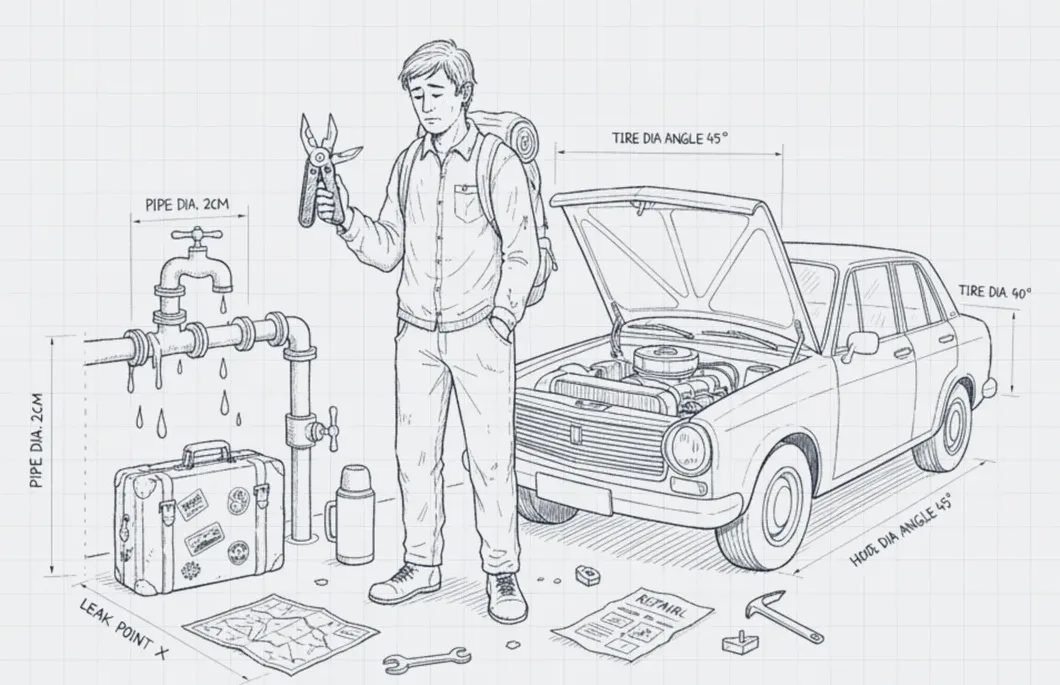
Travelers and do-it-yourselfers around the world encountered the same frustrations: leaky plumbing in cheap hotels, roadside car breakdowns, balky fixtures—situations that demanded full-strength pliers and multiple tools. Yet the only portable option, the Swiss Army knife, lacked real pliers. People had to choose between carrying a heavy toolbox or making do with inadequate pocket tools.

s2s3s4
Illustration: One day...
03 / 10
One day...

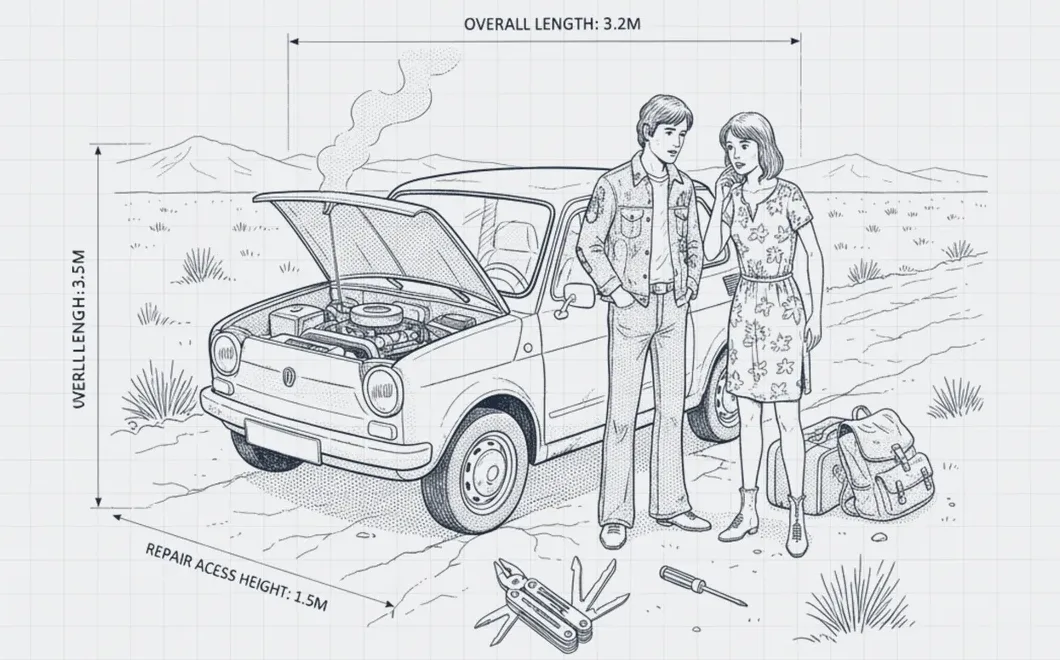
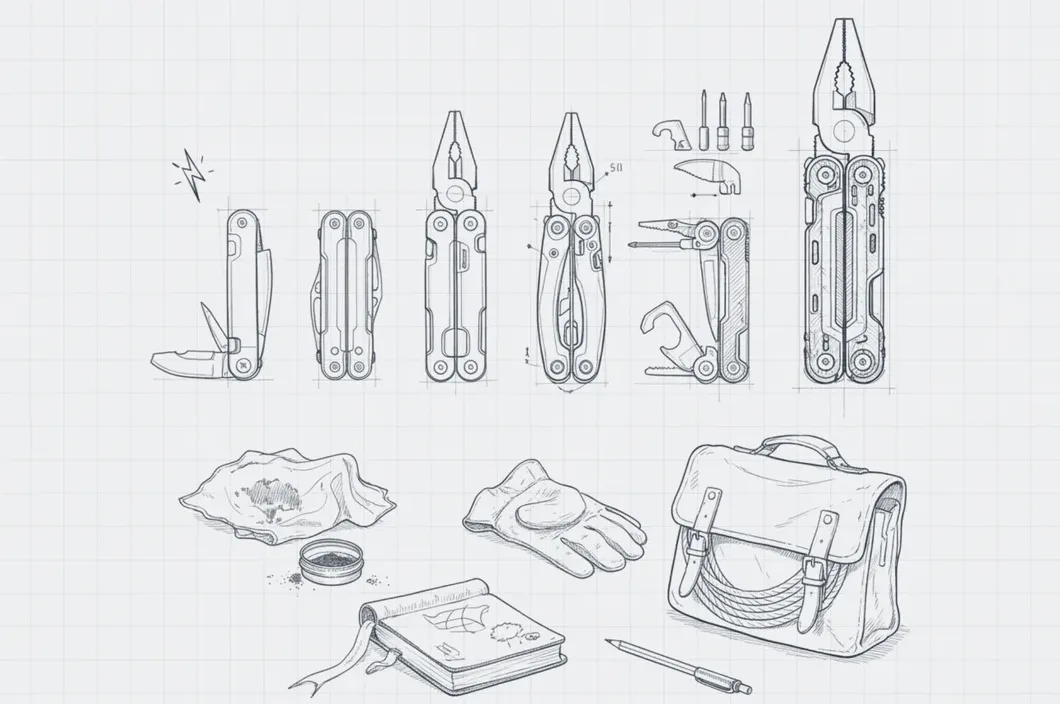
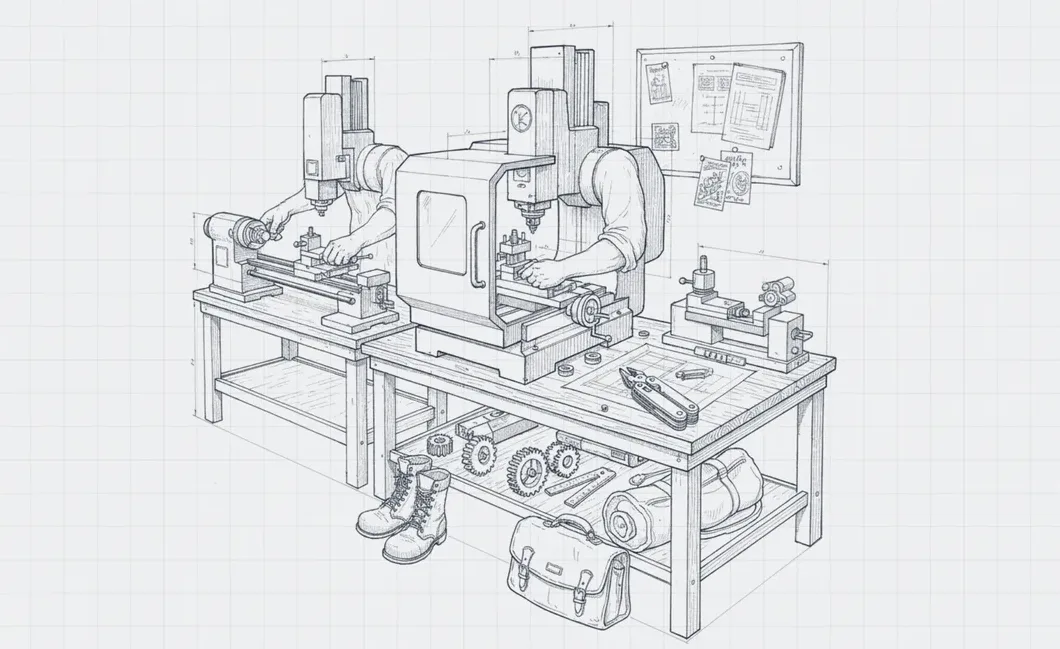
In 1975, 26-year-old Tim and his wife Chau took a budget trip to Europe and Asia in a temperamental $300 Fiat. As they moved between cheap hotels and roadside repairs, Tim kept wishing for a pliers-based multipurpose tool. In Tehran, he sketched out a design that would solve the problem: a foldable pair of pliers with several other tools tucked into the handles. Back in the U.S., he scavenged metal from discarded appliances and began crafting prototypes in his brother-in-law's garage.

“the then-26-year-old Tim kept wishing for a multi-tool with a pair of full-strength pliers—something that no Swiss Army knife included.”
s1s2s3s4
Illustration: Because of that...
04 / 10
Because of that...

Tim spent three years (1975–1978) perfecting his prototype and filing for a patent. With patent application and working model in hand, he set off to sell his idea to tool and knife companies, confident someone would see the value.

s1s2s4
Illustration: Because of that...
05 / 10
Because of that...

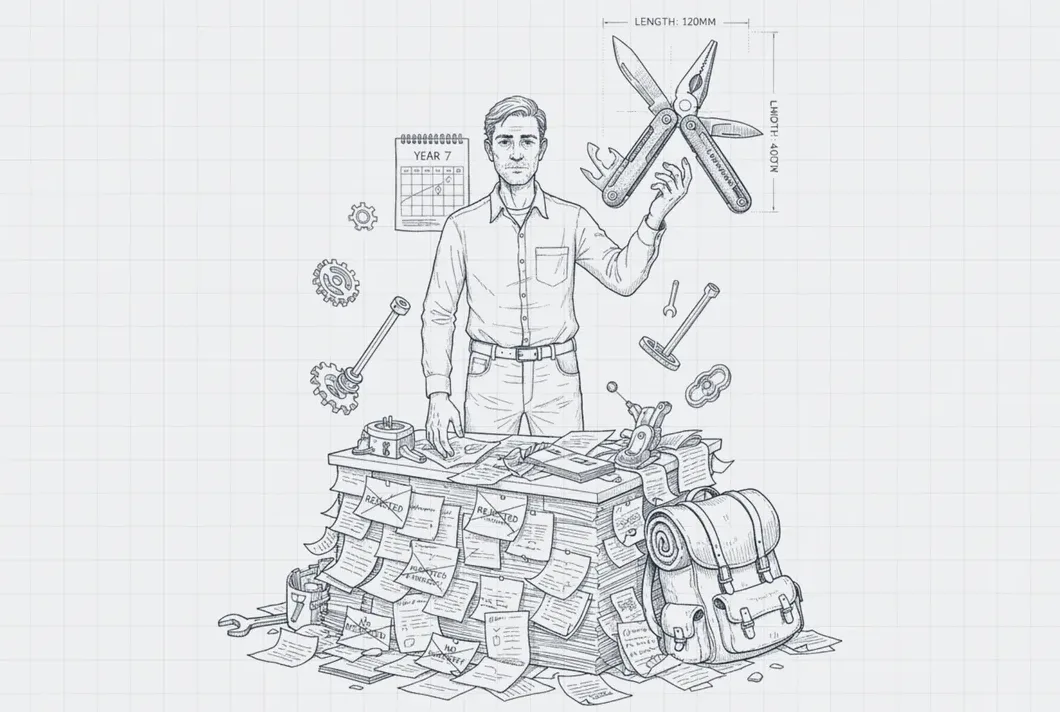
Rejection letter after rejection letter arrived. For another three and a half years, no company bit on Tim's idea. He waited seven years in total—from the late 1970s until around 1983—before making his first sale of just $175. It was a grueling test of faith and perseverance.

s1s2
Illustration: Because of that...
06 / 10
Because of that...

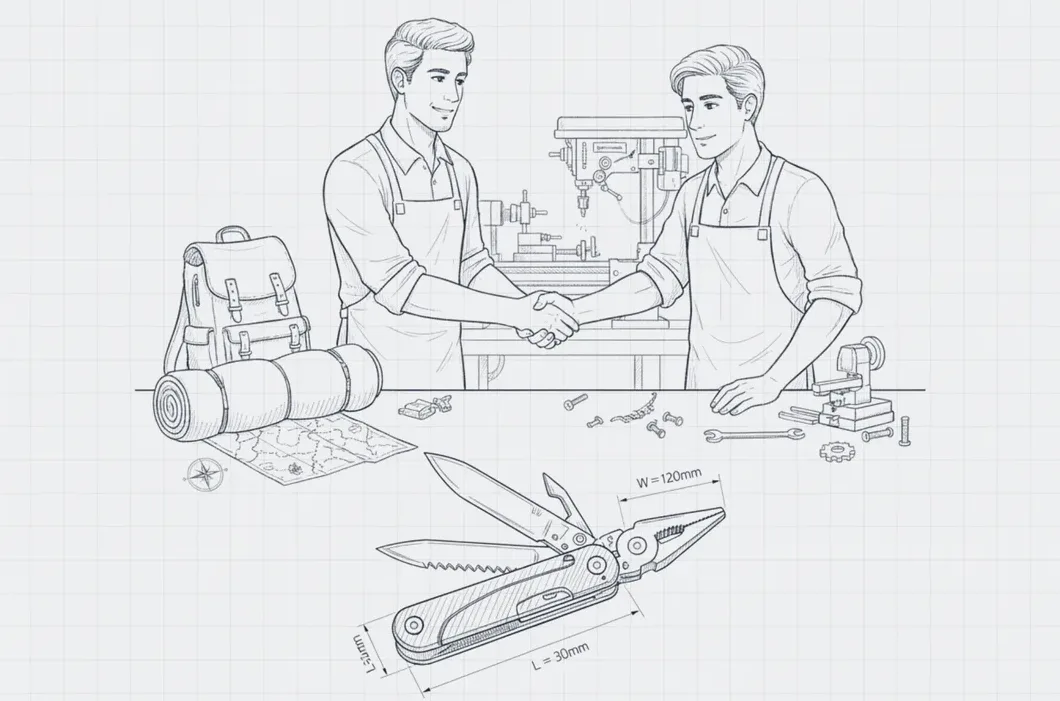
Tim partnered with his college friend Steve Berliner, and together they decided to manufacture and market the tool themselves. In July 1983, they incorporated as Leatherman Tool Group. That spring, they received their first real order: 500 tools from Cabela's, the outdoor gear catalog. They set up production and shipped their first Pocket Survival Tools (PSTs) just before Christmas 1983, creating an entirely new market niche in the cutlery business.

s2s6s7s8
Illustration: Until finally...
07 / 10
Until finally...

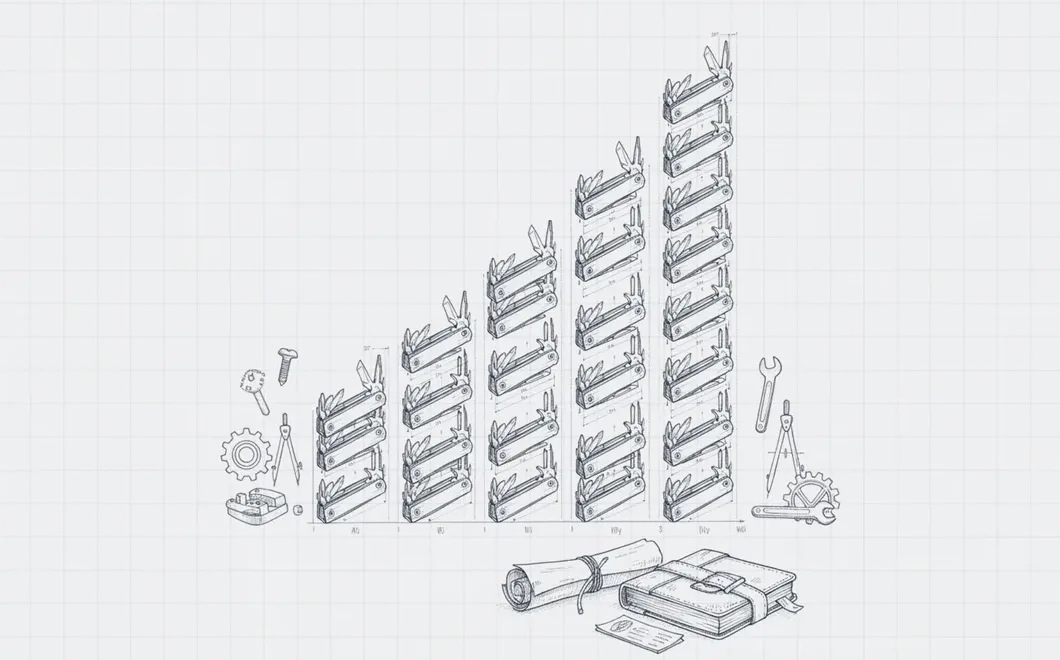
Word spread fast among outdoor enthusiasts and problem-solvers. By June 1984, Leatherman had shipped 4,000 tools; by Christmas 1984, close to 30,000 units. By late 1985, ten major U.S. catalogs—including Spiegel, Neiman-Marcus, and L.L. Bean—carried the Leatherman tool. In 1993, the company sold more than one million PSTs, employed 450 workers, and generated upwards of $100 million in annual revenue, dominating the multipurpose folding pocket tool niche.

s7s8
Illustration: And every day after that...
08 / 10
And every day after that...

Leatherman Tool Group continues to design and manufacture original American multi-tools and knives in Portland, Oregon, employing approximately 416 people across four continents. The company backs every product with a 25-year no-questions-asked warranty, upholding a commitment to durability, craftsmanship, and U.S. living-wage manufacturing jobs.

s9
Illustration: Reflection / realization
09 / 10
Reflection / realization

Tim Leatherman's journey reveals a profound truth: breakthrough innovations often spring from the simplest frustrations—and from the stubbornness to believe in a solution when everyone else says no. The seed planted in Vietnam, nurtured through a shoestring trip to Europe, and tested by seven years of rejection, grew into a tool that millions rely on because Tim refused to compromise on the problem he set out to solve.

s1s2s5
Illustration: The journey today
10 / 10
The journey today

Today, Leatherman Tool Group stands as a testament to patient problem-solving and founder resilience. From a sketch in Tehran to a global brand that originated an entire product category, the company remains rooted in its Portland manufacturing base, its 25-year warranty promise, and the spirit of resourcefulness that Tim and Chau embodied on that 1975 road trip. The Leatherman multi-tool is no longer just a clever invention—it's a trusted companion for anyone who refuses to be stopped by a broken fixture, a loose screw, or a roadside breakdown.

s1s2s4s9
Act Two

Why it exists

Start at the belief at the center — then the circle zooms out through the method and the offer.

WHY

Leatherman exists because people shouldn't have to choose between capability and portability when problems demand fixing. Tim Leatherman's formative years in Vietnam cultivated a deep appreciation for mechanical things and how they work—a seed that grew into the conviction that everyone deserves a tool ready for the unexpected. The company believes in empowering people to solve problems on the spot, wherever they are, with a tool they can trust for decades.

s2s3s4s5s9
HOW

Leatherman differentiates through relentless problem-solving and American craftsmanship. The company designs multi-tools based on real-world frustrations—born from Tim's own experience with leaky plumbing and roadside fixes where existing tools fell short. Every product is manufactured in Portland, Oregon, supporting local living-wage jobs and emphasizing durability over disposability. The company backs this commitment with a 25-year no-questions-asked warranty, signaling deep trust in its quality and a long-term relationship with customers. By creating tools that combine full-strength pliers with multiple functions in a compact format, Leatherman pioneered an entirely new market niche and set the standard for capability in a pocket-sized package.

s2s3s4s7s8s9
WHAT

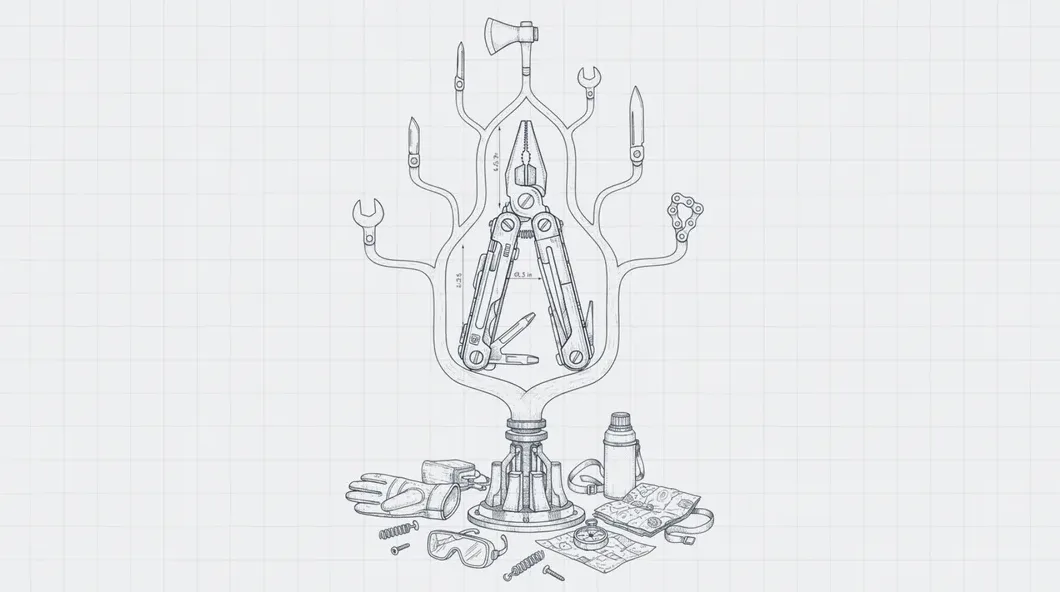
Leatherman designs and manufactures original American multi-tools and knives. The flagship product, the Pocket Survival Tool (PST), launched in 1983 as a foldable pair of pliers with several other tools tucked into the handles. Today the company produces a range of multi-tools and knives, all backed by a 25-year warranty. Production remains based in Portland, Oregon, where approximately 416 employees work across four continents to deliver durable, portable hand tools that solve real-world problems.

s1s2s6s7s8s9
Act Three

Who it serves

Step into one customer’s world — the person the whole business is built around.

Illustration of David the Adventure Traveler
Meet
David the Adventure Traveler
28-year-old outdoor enthusiast and budget traveler
David travels frequently on a shoestring budget, often driving older vehicles through remote areas and staying in budget accommodations. He values self-reliance and the ability to fix things himself, but constantly runs into situations where his Swiss Army knife isn't enough for plumbing leaks, car repairs, and other mechanical challenges on the road.
What they SEESees
He sees Leatherman in outdoor catalogs from Cabela's, Early Winters, L.L. Bean, Spiegel and Neiman-Marcus, dominating the niche and proudly Portland-made.
from the empathy map
  • Sees Leatherman tools featured in outdoor gear catalogs from Cabela's, Early Winters, L.L. Bean, Spiegel, and Neiman-Marcus s2s7s8
  • Observes that Leatherman dominated the multi-purpose folding pocket tool niche by 1993, selling more than one million units s7s8
  • Sees that Leatherman emphasizes its Portland, Oregon production base and commitment to U.S. manufacturing and local living-wage jobs s9
What they HEARHears
He hears through catalogs and specialty retailers that Leatherman originated the category and is crafted in Portland with local living-wage jobs.
from the empathy map
  • Hears about Leatherman through outdoor gear catalogs and specialty retailers like Cabela's, Early Winters, Neiman-Marcus, and L.L. Bean s2s7s8
  • Learns that Leatherman originated the multipurpose tool category and created a new market niche in the cutlery business s7s8
  • Hears that Leatherman tools are designed and manufactured in Portland, Oregon, emphasizing U.S. craftsmanship and local living-wage jobs s9
What they SAYSays
"I wish for a multi-tool with full-strength pliers no Swiss Army knife has—durable, American-made, and warrantied for 25 years."
from the empathy map
  • Wishes for a multi-tool with a pair of full-strength pliers that no Swiss Army knife includes s4
  • Recognizes the need for a pliers-based multipurpose tool after encountering repeated fix-it situations on the road s1s2s3
  • Values durability, American craftsmanship, and the confidence of a 25-year warranty on essential gear s9
What they DODoes
He travels cheap, attempts DIY roadside and plumbing fixes with inadequate pocket knives, and buys his gear through catalogs like Cabela's and L.L. Bean.
from the empathy map
  • Travels on a budget, encountering leaky hotel plumbing and roadside car repairs that require on-the-spot fixes s2s3s4
  • Attempts DIY repairs and mechanical fixes using whatever tools are available, often finding existing pocket knives inadequate s2s4
  • Purchases outdoor and adventure gear through specialty catalogs like Cabela's, Early Winters, L.L. Bean, and Spiegel s2s7s8
Act Four

How it makes money

The business model in seven moves — each one drawn, each one cited.
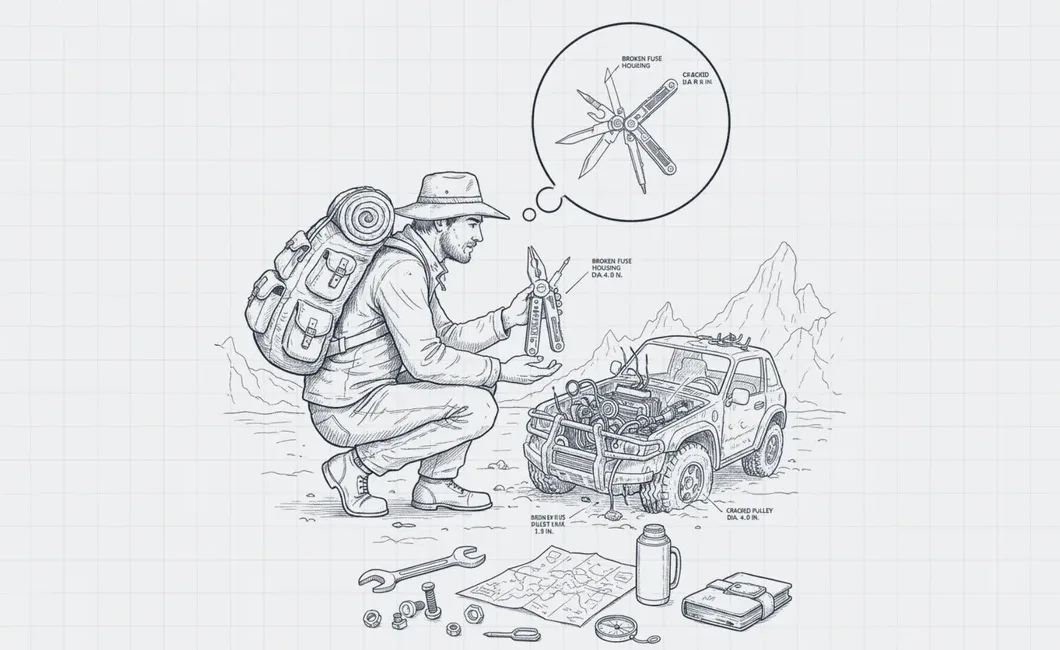
Illustration: Problem & customer
Problem & customer 1 / 7
Travelers and do-it-yourselfers constantly hit leaky plumbing, roadside car repairs, and other fix-it moments where they needed full-strength pliers and multiple tools—but had nothing compact enough to carry.
Problem
The pain in the market
  • Travelers and do-it-yourselfers constantly encountered leaky plumbing, roadside car repairs, and other fix-it situations where a full-strength pair of pliers and multiple tools were needed but not available in a compact, portable format. s2s3s4
  • The Swiss Army knife—the dominant portable multi-tool of the era—lacked full-strength pliers, leaving a critical capability gap for users who needed serious gripping and turning power on the go. s4
Customer
Who lives with that pain
  • Outdoor and adventure gear enthusiasts who valued capability and portability in remote or field settings. s2s7
  • Budget travelers and DIY enthusiasts who frequently faced on-the-spot repair and maintenance challenges with limited access to full toolkits. s2s3s4
  • General lifestyle and gift buyers, as evidenced by adoption across catalog companies including Spiegel, Neiman-Marcus, and L.L. Bean by late 1985. s8
Illustration: Value & solution
Value & solution 2 / 7
The Pocket Survival Tool—a compact, foldable pair of full-strength pliers with multiple tools tucked in the handles—was the first pliers-based multipurpose tool, sketched in 1975 Tehran and prototyped over three years in Portland.
Unique value proposition
The belief the brand is built on
  • A compact, foldable pair of full-strength pliers with multiple tools tucked into the handles—the first pliers-based multipurpose tool that created an entirely new market niche. s1s6s7s8
  • Durable, American-made craftsmanship backed by a 25-year no-questions-asked warranty, signaling unmatched quality and customer trust. s9
Solution
How that belief reaches the market
  • The Pocket Survival Tool (PST): a portable, foldable multi-tool combining full-strength pliers with several other tools in the handles, designed from Tim's 1975 Tehran sketch and prototyped over three years. s1s2s4s6
  • Original American multi-tools and knives designed and manufactured in Portland, Oregon, emphasizing durability, ease of carry, and multiple functions in one device. s9
Illustration: Channels
Channels 3 / 7
It reached buyers through outdoor gear and specialty catalogs, starting with Cabela's and Early Winters in spring 1983 and growing to ten U.S. catalog companies—Spiegel, Neiman-Marcus, and L.L. Bean among them—by late 1985.
  • Catalog-based distribution through outdoor gear and specialty retailers, starting with Cabela's and Early Winters Ltd. in spring 1983. s2s7s8
  • By late 1985, ten U.S. catalog companies—including Spiegel, Neiman-Marcus, and L.L. Bean—were selling the Leatherman tool, expanding reach into lifestyle and gift segments. s8
Illustration: Revenue
Revenue 4 / 7
The company earned through direct sales of multi-tools, moving more than a million Pocket Survival Tools and reaching $100 million in annual sales by 1993.
  • Direct sales of multi-tools and knives, generating upwards of $30 million in revenue by 1993 from more than one million Pocket Survival Tools sold. s7s8s9
  • By 1993, the company reached $100 million in annual sales with 450 workers, demonstrating rapid scaling through product sales. s8
Illustration: Costs
Costs 5 / 7
Running it meant U.S. manufacturing in Portland with living-wage jobs, years of scavenging metal for garage prototypes and patents, a 24,000-square-foot plant by 1992, and the cost of a 25-year no-questions warranty.
  • U.S.-based manufacturing in Portland, Oregon, with a commitment to local living-wage jobs and in-house production facilities. s9
  • Initial prototype development required years of scavenging metal from discarded appliances and crafting prototypes in a garage, followed by patent application costs. s1s2s4
  • In 1992, the company moved into a new building with 24,000 square feet of production space and invested in a computerized in-house drawing program to design new tools. s8
  • 25-year no-questions-asked warranty program, implying ongoing service and replacement costs as part of the quality commitment. s9
Illustration: Key metrics
Key metrics 6 / 7
Traction showed early—4,000 tools shipped by June 1984, nearly 30,000 by that Christmas—then more than a million units and $30M+ in revenue by 1993, dominating the folding-tool niche.
  • By June 1984, Leatherman had shipped 4,000 tools; by Christmas 1984, close to 30,000 units had been shipped, demonstrating rapid early traction. s7
  • By 1993, Leatherman sold more than one million Pocket Survival Tools and generated upwards of $30 million in revenue, dominating the multi-purpose folding pocket tool niche. s7s8
  • By 1993, the company had grown to 450 workers and $100 million in annual sales, up from 100 employees in 1992. s8
  • As of June 2026, Leatherman Tool Group has approximately 416 employees across 4 continents, with production still based in Portland, Oregon. s9
Illustration: Unfair advantage
Unfair advantage 7 / 7
As the first-mover who originated the pliers-based tool category in 1983, Leatherman paired the founder's mechanical insight—seeded in Vietnam and crystalized on his 1975 trip—with American craftsmanship and a 25-year warranty rivals couldn't easily copy.
  • First-mover advantage: Leatherman originated the multipurpose pliers-based tool category and created a new market niche in 1983, establishing the brand as the category leader. s7s8
  • Founder's deep domain insight from two and a half years in Vietnam developing a keen interest in mechanical things, followed by the 1975 Europe trip that crystalized the product vision. s5s2s4
  • 25-year no-questions-asked warranty and commitment to American manufacturing in Portland, creating strong brand trust and differentiation that is difficult to replicate. s9
The receipts

Every claim, tethered to a real source

  1. s1NPR How I Built This: Tim Leatherman Episode — https://www.npr.org/2022/01/28/1076433969/leatherman-tool-group-tim-leatherman
  2. s2Official Leatherman Company Story Page — https://www.leatherman.com/pages/the-leatherman-story
  3. s3GearJunkie Interview: Origin of Leatherman — https://gearjunkie.com/proj/leatherman/origin-of-leatherman
  4. s4REI Uncommon Path: Innovators Profile on Tim Leatherman — https://www.rei.com/blog/camp/innovators-tim-leatherman
  5. s5LinkedIn Article: Tim Leatherman and Vietnam Connection — https://www.linkedin.com/pulse/tim-leatherman-hennie-groenewald
  6. s6Wikipedia: Leatherman Company Overview — https://en.wikipedia.org/wiki/Leatherman
  7. s7Encyclopedia.com: Leatherman Tool Group Company History — https://www.encyclopedia.com/books/politics-and-business-magazines/leatherman-tool-group-inc
  8. s8FundingUniverse: Leatherman Tool Group History — https://www.fundinguniverse.com/company-histories/leatherman-tool-group-inc-history/
  9. s9LeadIQ Company Profile: Current Leatherman Operations — https://leadiq.com/c/leatherman-tool-group/5a1d8a932400002400644cb1