Act One
How Ullah Lab came to be
First the arc at a glance, then the story in 9 drawn beats.
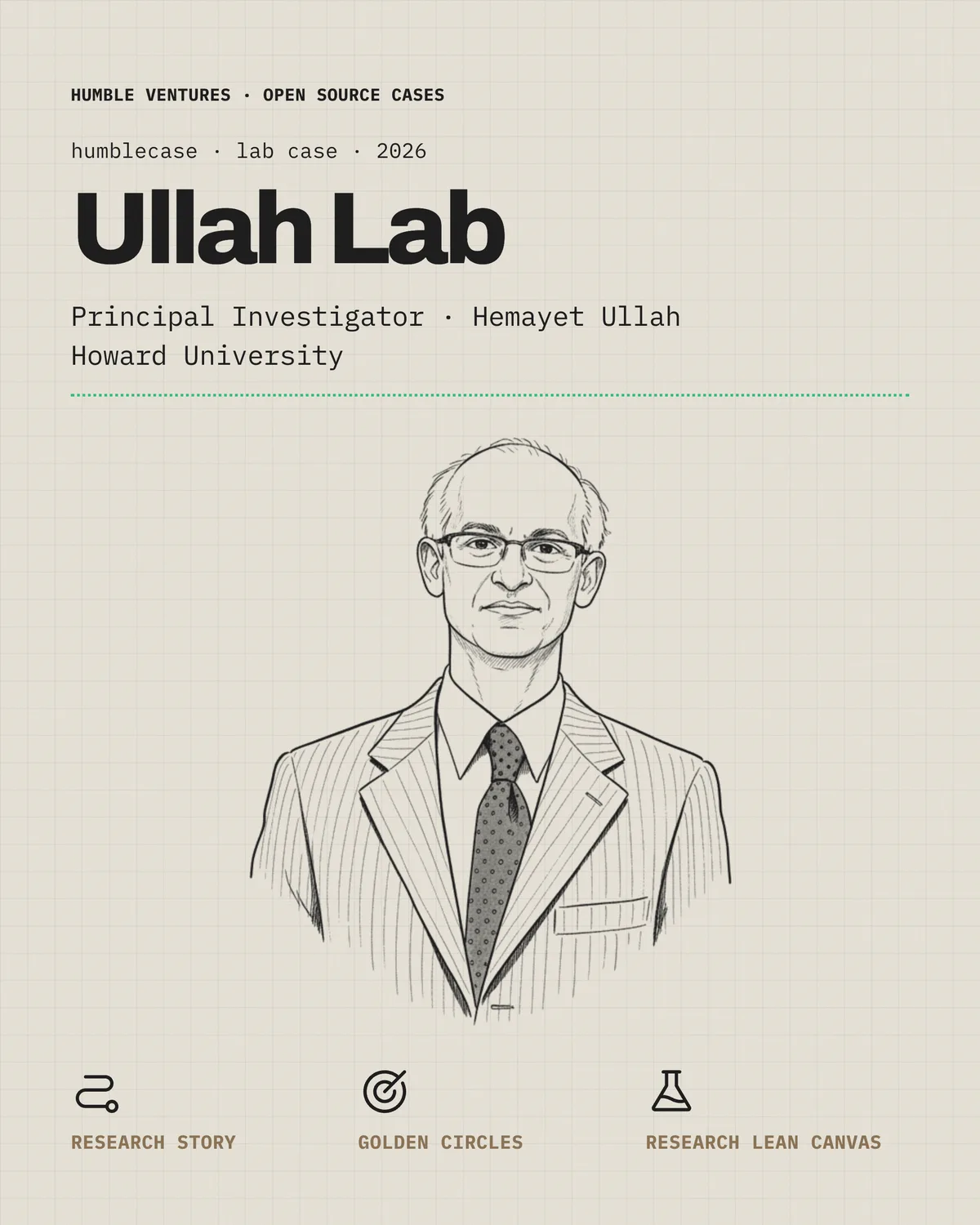
The research story of Hemayet Ullah, Principal Investigator, in 9 beats — then what the lab knows and what it offers.
Welcome to the open-source case for Ullah Lab. Hemayet Ullah's story is worth the telling because of its throughline: a plant-science student who left the University of Dhaka for an MS at NC State and a PhD at UNC Chapel Hill has built a career on a single, stubborn question — how a cell's signalling hubs decide when to grow and how to withstand stress — and followed it from plant G proteins to their structural cousin RACK1. At Howard University, his lab is where that question lives now, probing how these hubs integrate growth and stress signals and whether molecules aimed at them can tune outcomes in crops, viral infection and cancer, all while bringing students into science. The Research Story traces how this PI and his central question came to be; the Golden Circle sets out why he does the work, how, and what it has produced — including the finding that the G-protein alpha subunit GPA1 positively modulates cell division (Science, 2001); and the Research Lean Canvas grounds it in a tangible problem, crops failing in salty soil, and the rice growers on salt-affected land who carry it.
Salty soil makes rice leaves yellow early and cuts harvests, a problem that grows as the climate changes. Ullah studies RACK1, a protein that works like a switchboard for a plant's stress and growth signals. In rice, boosting RACK1B kept leaves green under salt by slowing chlorophyll breakdown; in Arabidopsis, losing RACK1A left plants salt-sensitive. He has also made small molecules that turn the switchboard up or down; one boosted root growth and could become a root-inducing bio-stimulant for growers. s18s41s22s4s9s11
Many viruses copy themselves by borrowing a protein from the cells they infect, RACK1, to read their own genetic instructions. Ullah solved the first 3D structure of a RACK1 protein and, with Georgetown chemists, designed small molecules that fit its working spot. In lab-grown cells they stopped herpes simplex virus about as well as the standard drug acyclovir, and worked better alongside it. In a later preprint, the same compounds cut HIV-1 and hepatitis C reporter activity and reduced HIV protein production in infected cells. It is like changing the lock on a tool the burglar needs instead of chasing the burglar: aiming at the host protein rather than the fast-changing virus is why the approach could reach many viruses. s8s1s33s23
Standard COVID tests find the virus's genetic material, but they cannot tell a virus that is still copying itself from harmless leftover fragments, which muddies decisions about quarantine and treatment. A replicating coronavirus makes a mirror-image copy of its RNA (the negative strand), so Ullah proposed testing for that copy instead. With Princeton's Cameron Myhrvold, he prototyped a CRISPR-based paper test strip that detects only replicating coronaviruses. It is like checking whether the stove is still lit rather than whether the pan is warm. Both studies are preprints, not yet peer reviewed. s29s27
New variants dodge drugs by mutating. Ullah targets a stretch of repeated U letters (the 5′-polyU tract) on the virus's mirror-image strand: the virus needs it, it is conserved across variants, and human cells carry no such tract. In mouse-coronavirus experiments, a short designed DNA strand aimed at that tract prevented virus-induced cell death and stopped infectious virus from forming, while host cells were unaffected. The same tract could also serve as an early marker of infection. These results are preprints from cell experiments. s31s30
Some cancers become deadly when tumour cells start moving and invading new tissue, and RACK1 helps drive that movement. In lab tests on two breast-cancer cell lines, Ullah's RACK1 inhibitor compounds (SD29 and SD29-14) stopped the cells growing the protrusions they crawl with and cut their migration and invasion (preprint). He and Georgetown's Sivanesan Dakshanamurthy have a U.S. patent application covering these compounds for cancers in which RACK1 drives cell migration. It is the same switchboard idea again: block the protein the cancer relies on to move. s32s25
First the arc at a glance, then the story in 9 drawn beats.
From Dhaka to North Carolina, a plant-science student earned an MS at NC State and a PhD at UNC Chapel Hill. s21
In Alan Jones's lab he traced how plant cells use G proteins to drive division, germination and water-controlling guard cells. s35s37s36s34
At Howard from 2004 he took up RACK1, a G-beta lookalike, and solved the first crystal structure of any RACK1. s21s38s22s1
He charted its contacts and phosphorylation switch, and showed it steers salt tolerance and keeps rice leaves green. s3s6s9s18
With Georgetown he designed molecules for RACK1's working spot, tuning roots and blocking herpes in cells; joint patents 2023-2026. s11s8s26
Preprints applied the approach to coronavirus with a DNA strand and CRISPR strip, then to HIV-1 and breast-cancer cells. s31s30s29s27s33s32
Alongside the science he mentors undergrads through phage genomics, teaching tools and an exhibit on Black plant scientists. s14s17s19s45s20s13s12

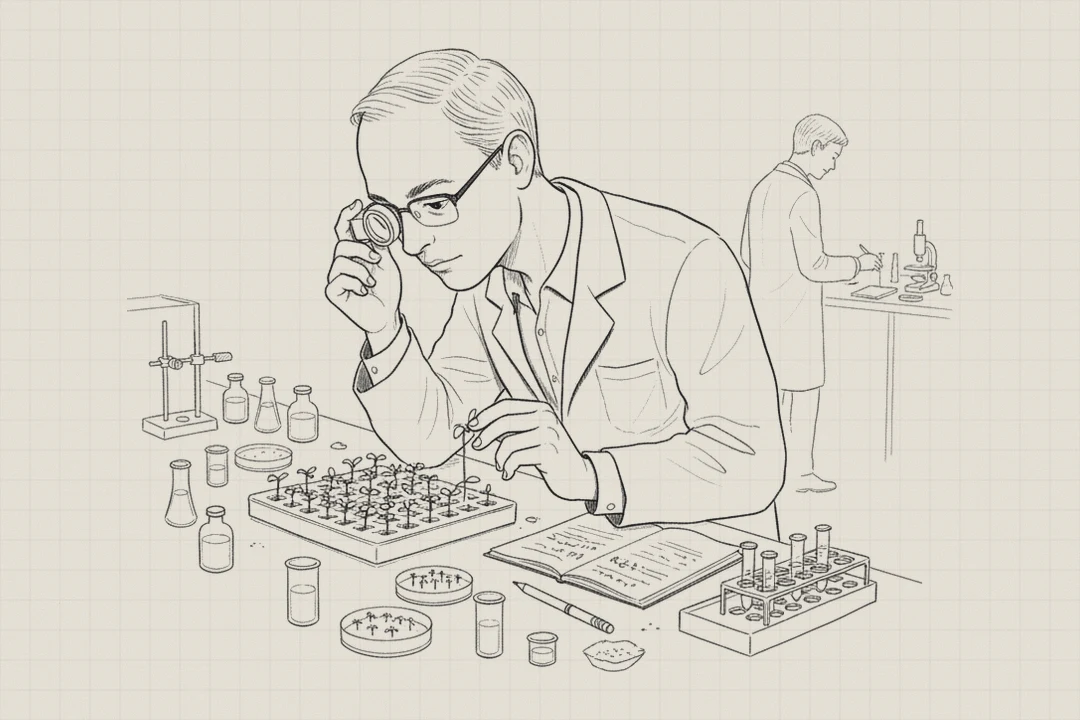
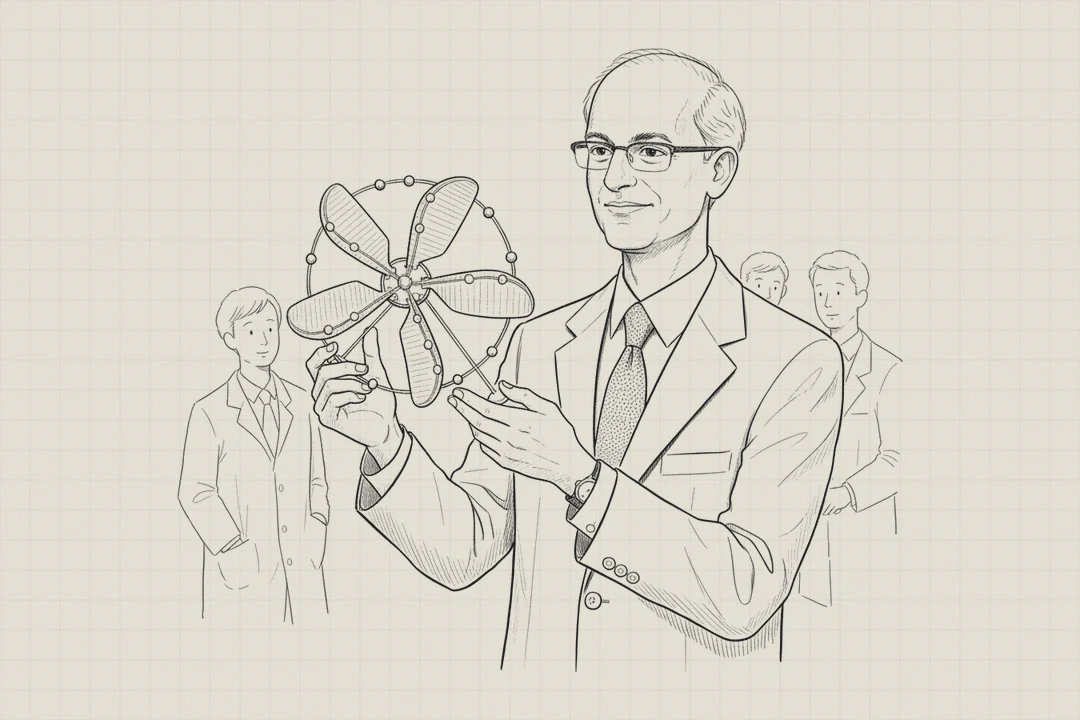
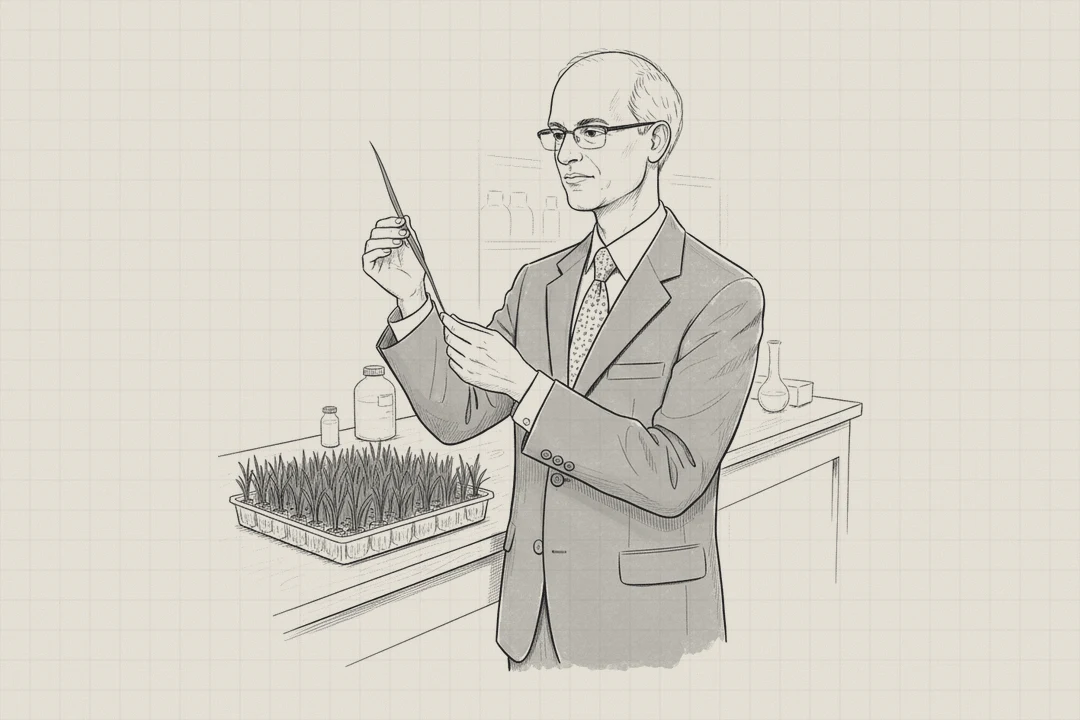
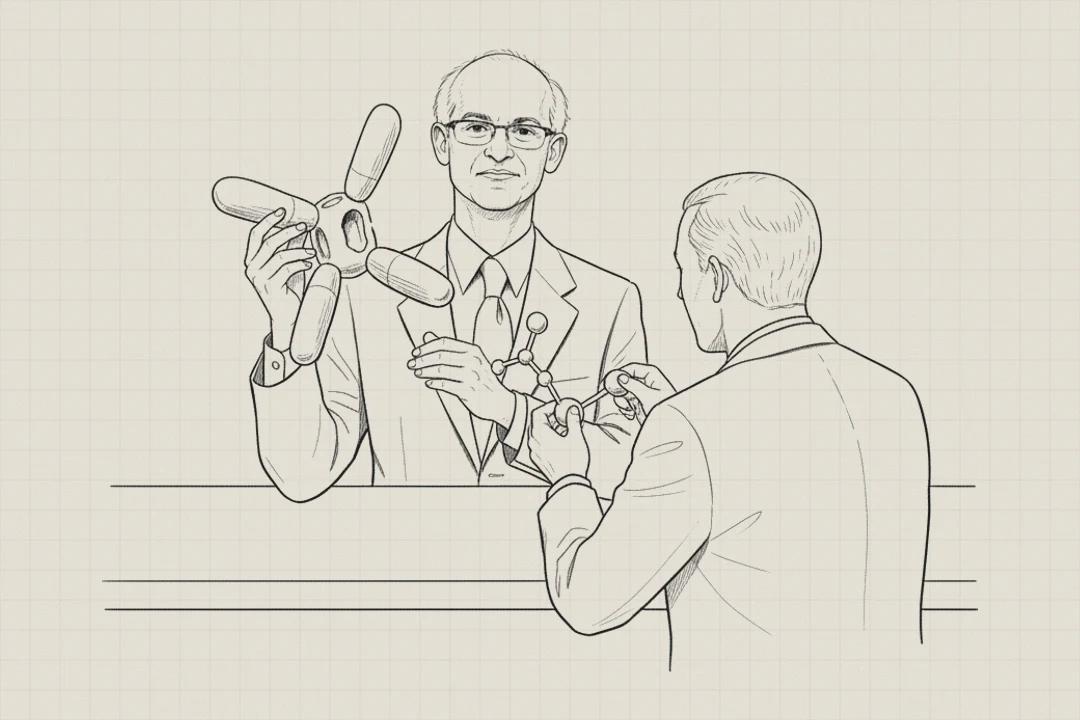
Start at the belief at the center — then the circle zooms out through the method and the offer.
The patents that came out of each line of the work, in the order of the PI’s career — what they protect, and what a patent analysis suggests they could make possible. Statuses come from the patent records; analysis is labelled.
From his UNC years in Alan Jones's group: an international filing on improving plant traits by altering the activity of the G-protein alpha and beta subunits. It is assigned to UNC Chapel Hill, with Ullah one of eight inventors. s46
Two applications with Georgetown's Sivanesan Dakshanamurthy, assigned to Howard, on methods for modulating a plant's response to environmental stress. s48s50
Three granted patents with Dakshanamurthy, assigned to Howard, on methods for treating viral infection. The compounds aim at RACK1, a protein in our own cells that many viruses borrow to make their proteins. s52s54s56s8s33
An application with Dakshanamurthy, assigned to Howard, on compounds against the migration and invasion of cancer cells. s58
Two applications, assigned to Howard, on treating and detecting coronavirus by targeting a stretch of its RNA: one by Ullah alone, one with Saadyah Averick on a targeted oligo. s60s62
An international application with Darnell Davis, assigned to Howard, on rapid lateral-flow detection of actively replicating coronavirus infection. s64
The need, the work, the path: who has the problem, what the PI brings to it, and how it reaches people. Every cell cited.
The researcher, the program, the field it serves, who funds and partners on it, and the publication record. Every line cited.